2026-05-29
Excessive Iodine Intake: How Does It Affect the Thyroid?
Learn how excessive iodine intake impacts thyroid health, why supplements may be unnecessary in Korea, and tips for healthy consumption.
Excessive Iodine Intake: How Does It Affect the Thyroid?
This is Hanaro Medical Foundation, your health checkup center in Jongno and Gangnam.
Iodine is the raw material used to produce thyroid hormones. Consequently, many people wonder, ‘Should I be taking iodine supplements?’
However, iodine can be problematic whether you have too much or too little. Today, Hanaro Medical Foundation will explore ‘Iodine and Thyroid Health.’
Are Iodine Supplements Necessary?
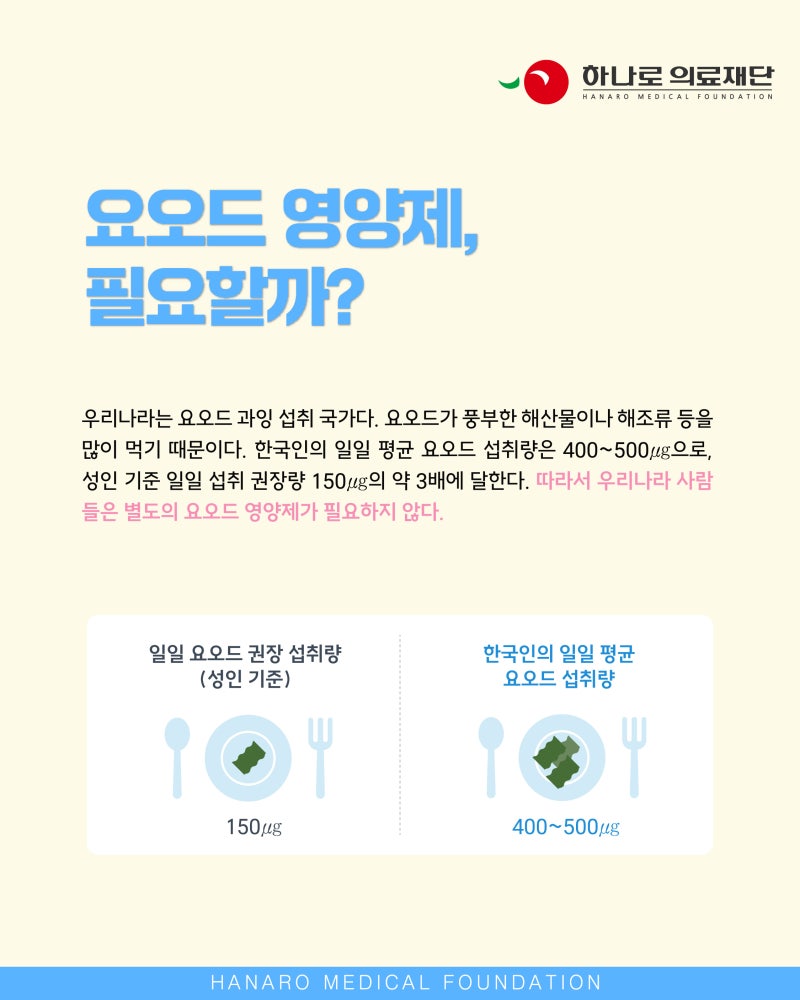
South Korea is a country with excessive iodine intake. This is because Koreans consume a lot of seafood and seaweed, which are rich in iodine. The average daily iodine intake for Koreans is 400–500㎍, which is about three times the recommended daily intake of 150㎍ for adults. Therefore, iodine supplements are generally not necessary for people in Korea.
Excessive Iodine Intake and Thyroid Disease
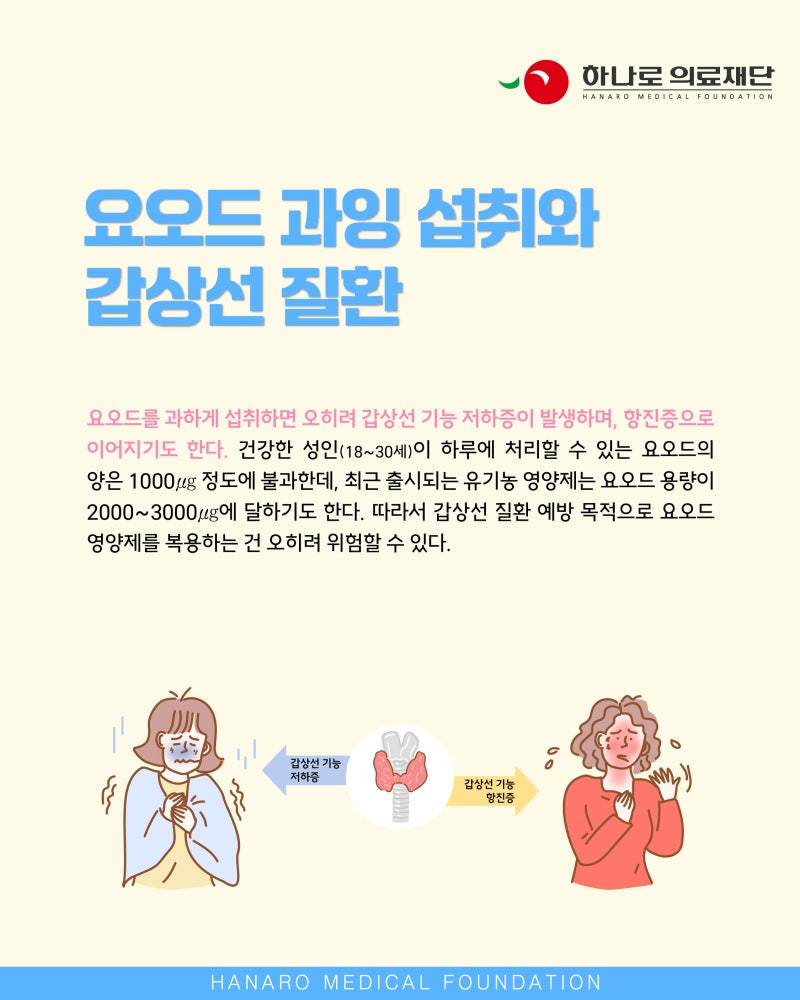
Consuming too much iodine can actually cause hypothyroidism and may even lead to hyperthyroidism. A healthy adult (aged 18–30) can only process about 1,000㎍ of iodine per day, yet some organic supplements recently released on the market contain as much as 2,000–3,000㎍. Therefore, taking iodine supplements for the purpose of preventing thyroid disease can actually be dangerous.
Iodine Content in Frequently Consumed Foods
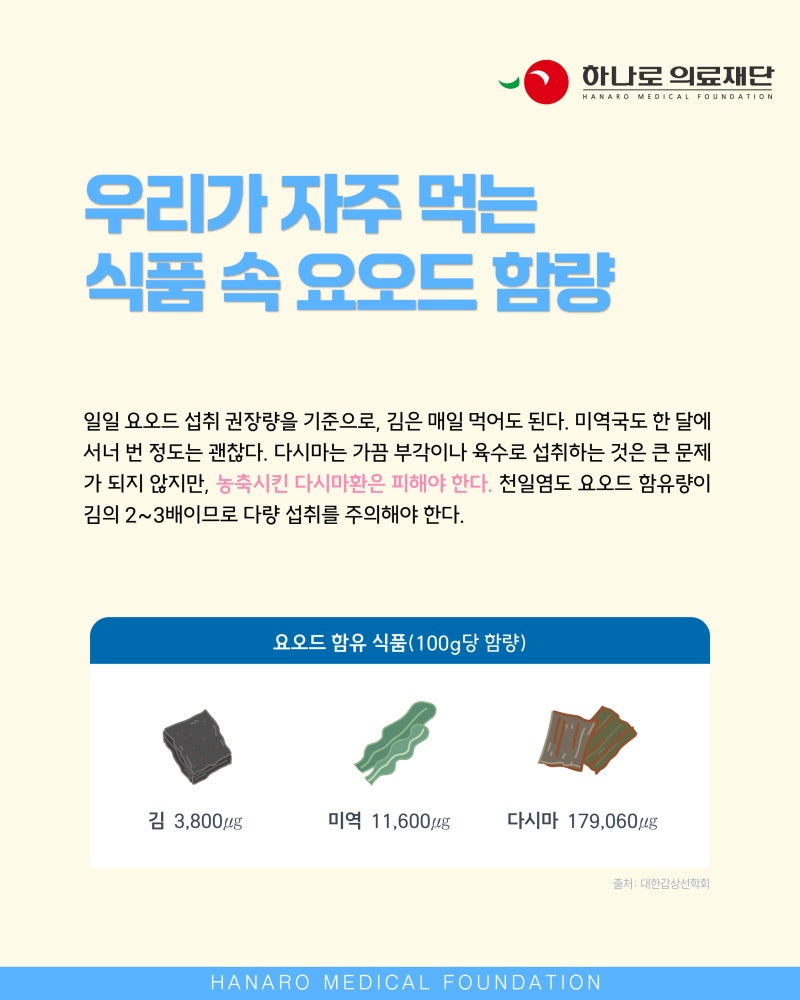
10g of dried laver (gim) contains about 400㎍ of iodine. Seaweed (miyeok) contains about 3 times more iodine than laver, and kelp (dasima) contains about 50 times more. Based on the recommended daily iodine intake, laver can be eaten every day. Seaweed soup is also fine three or four times a month. While consuming kelp occasionally as a snack (bugak) or in broth is not a major issue, concentrated kelp pills should be avoided. Sea salt also contains 2 to 3 times more iodine than laver, so caution should be exercised regarding large intakes.
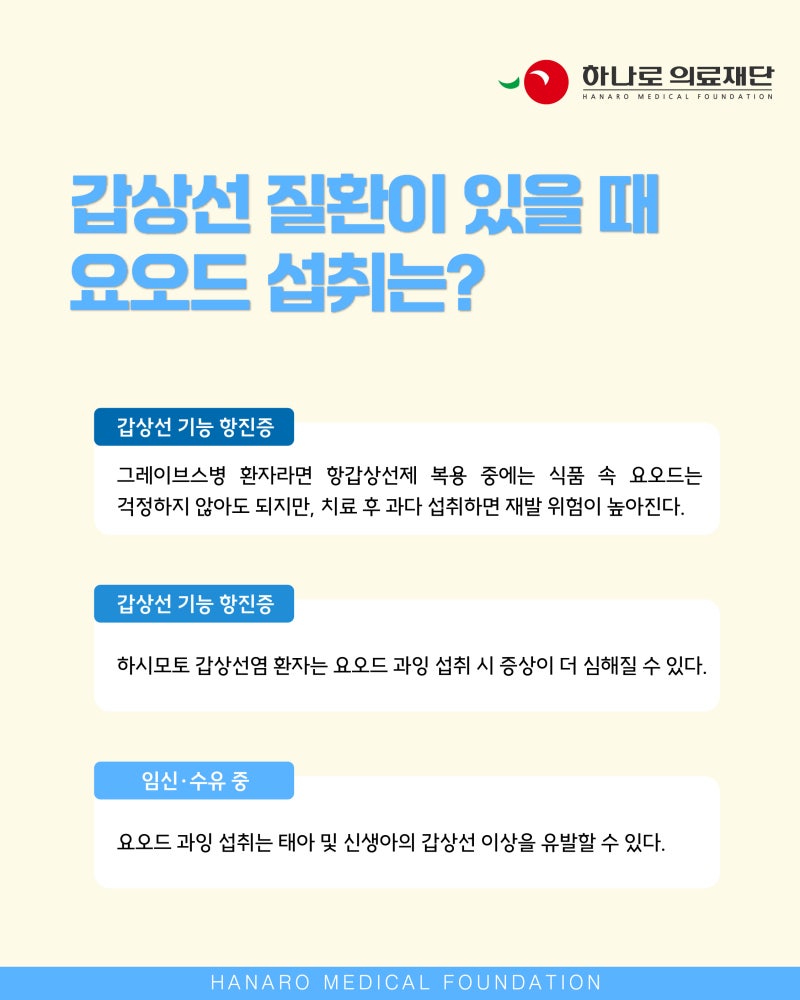
Iodine Intake When You Have Thyroid Disease
✔️ Hyperthyroidism
: For patients with Graves’ disease, there is no need to worry about iodine in food while taking anti-thyroid medication, but excessive intake after treatment increases the risk of recurrence.
✔️ Hypothyroidism
: For patients with Hashimoto’s thyroiditis, symptoms can worsen with excessive iodine intake.
✔️ During Pregnancy and Lactation
: Excessive iodine intake can cause thyroid abnormalities in fetuses and newborns.
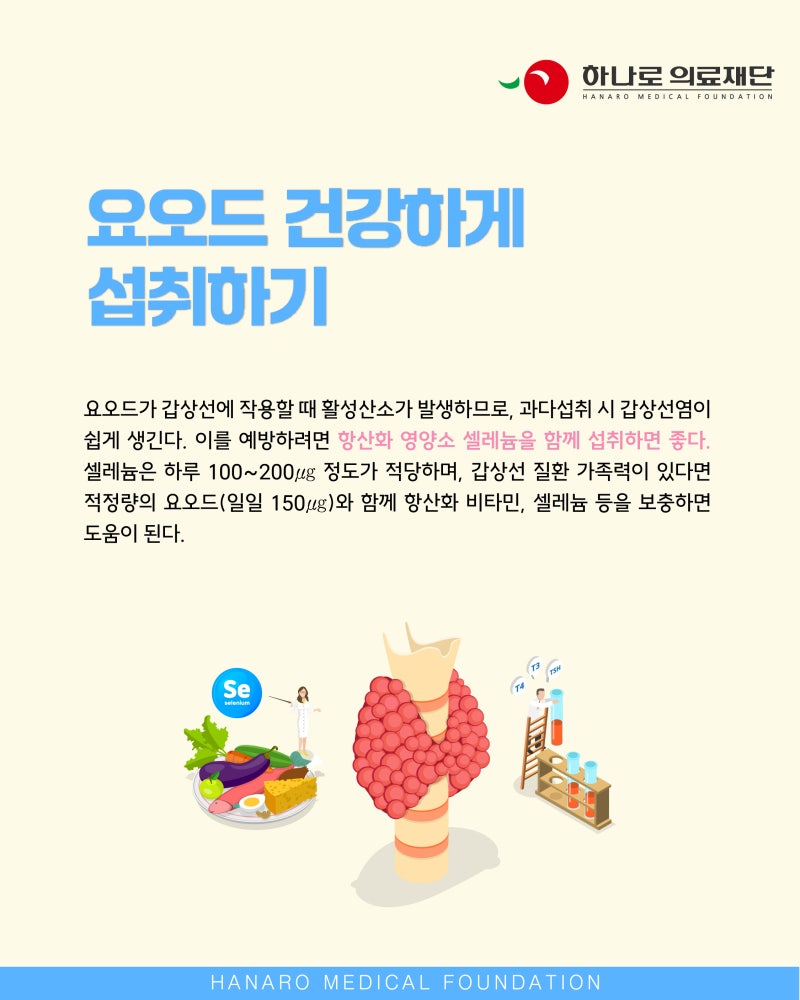
Healthy Iodine Consumption
When iodine acts on the thyroid, free radicals are generated, so thyroiditis can easily occur if consumed in excess. To prevent this, it is good to consume the antioxidant nutrient selenium together with it. About 100–200㎍ of selenium is appropriate. If you have a family history of thyroid disease, supplementing with antioxidant vitamins and selenium along with an appropriate amount of iodine can be helpful.
This content is an excerpt from a column by Dr. Eun-Jig Lee, an endocrinologist at Hanaro Medical Foundation, published in the June issue of ‘Healthy Life,’ the monthly magazine of the Korea Public Health Association. Please refer to the column below for more details.
👇👇👇
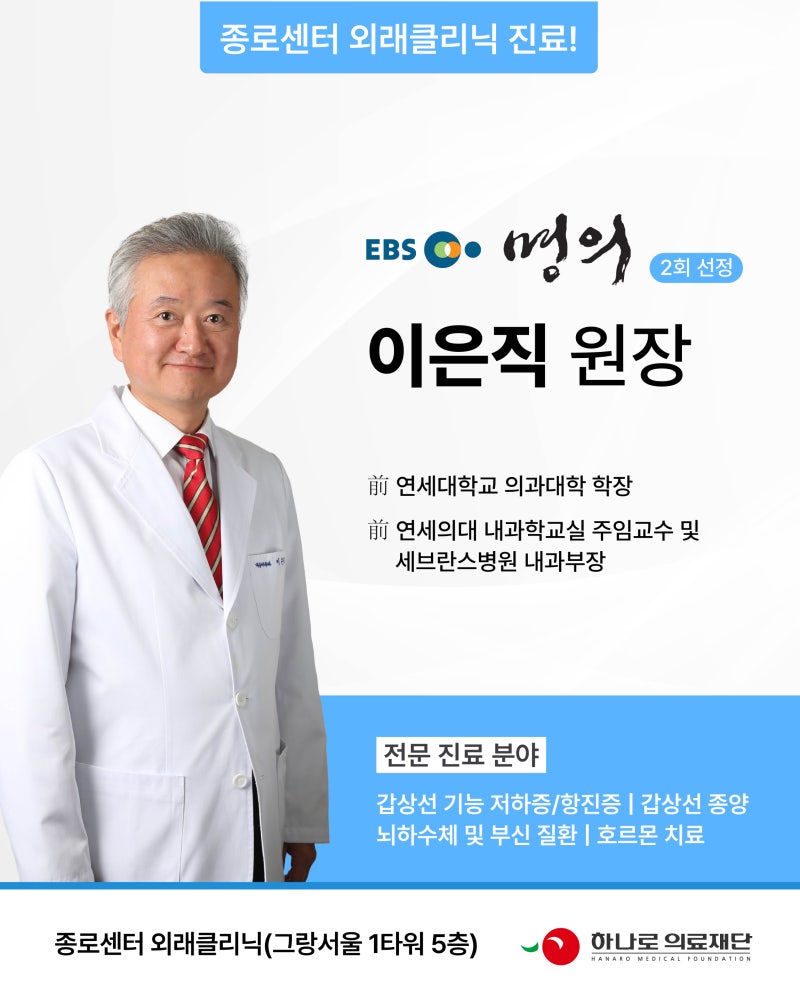
The Hanaro Medical Foundation Jongno Center has invited Professor Eun-Jig Lee, a leading authority on thyroid and pituitary diseases, to strengthen our expertise in endocrine disease treatment.
We provide medical services focusing on hypothyroidism/hyperthyroidism, thyroid tumors, pituitary and adrenal diseases, as well as various hormone treatments such as anti-aging, childhood growth, thyroid hormones, adrenocortical hormones, and testosterone. We ask for your interest and support.
You can make an appointment with Dr. Eun-Jig Lee of the Department of Endocrinology more quickly and easily through Naver Reservation.






#Iodine #IodineSupplements #Thyroid #Hyperthyroidism #Hypothyroidism #HanaroMedicalFoundation #HanaroMedicalFoundationJongnoCenter
Frequently Asked Questions
Do Koreans need to take separate iodine supplements?
No, there is no need to take separate supplements. Koreans consume a lot of seafood and seaweed, making Korea a country with excessive iodine intake, with an average daily iodine intake about three times the recommended amount for adults, so additional supplement intake is not recommended.
What problems can occur in the thyroid if too much iodine is consumed?
Hypothyroidism or hyperthyroidism can occur. Healthy adults can process about 1000㎍ of iodine per day, but consuming high-dose supplements or concentrated kelp pills that exceed this amount can increase the risk of thyroid disease.
How much seaweed (gim) or kelp (miyeok) is appropriate to eat in daily life?
You can eat gim (laver) every day, and miyeokguk (seaweed soup) is appropriate to consume about three to four times a month. However, kelp (dashima) contains about 50 times more iodine than gim, so it is best to consume it only occasionally as broth or fried snacks and avoid concentrated pill forms.
How should patients with hypothyroidism manage their iodine intake?
You must be careful about excessive iodine intake. Especially for patients with Hashimoto's thyroiditis, excessive iodine intake can worsen symptoms of hypothyroidism, so special attention should be paid to diet management.
Is there a way to prevent thyroiditis when consuming iodine?
Yes, consuming selenium, an antioxidant nutrient, together can be helpful. Thyroiditis can occur due to reactive oxygen species generated when iodine acts on the thyroid, and supplementing with about 100-200㎍ of selenium is effective in preventing this.