2026-05-29
Thyroid Nodules: Could It Be Cancer?
Learn about thyroid nodules, their symptoms, and diagnostic methods like ultrasound and FNA. Discover when a nodule is suspected of being malignant.
Thyroid Nodules: Could It Be Cancer?
Hello. This is Hanaro Medical Foundation, your health checkup center in Jongno and Gangnam.
Finding a thyroid nodule during a health checkup is much more common than you might think. While hearing that there is a ‘lump in the thyroid’ often leads to worries about cancer, the probability of a thyroid nodule being malignant (cancer) is actually only about 5% of all cases. Ultimately, the important thing is to determine whether it is benign or malignant through proactive testing and respond accordingly. Today, Hanaro Medical Foundation will guide you through ‘Thyroid Nodules and Diagnostic Methods.’
What is a Thyroid Nodule?
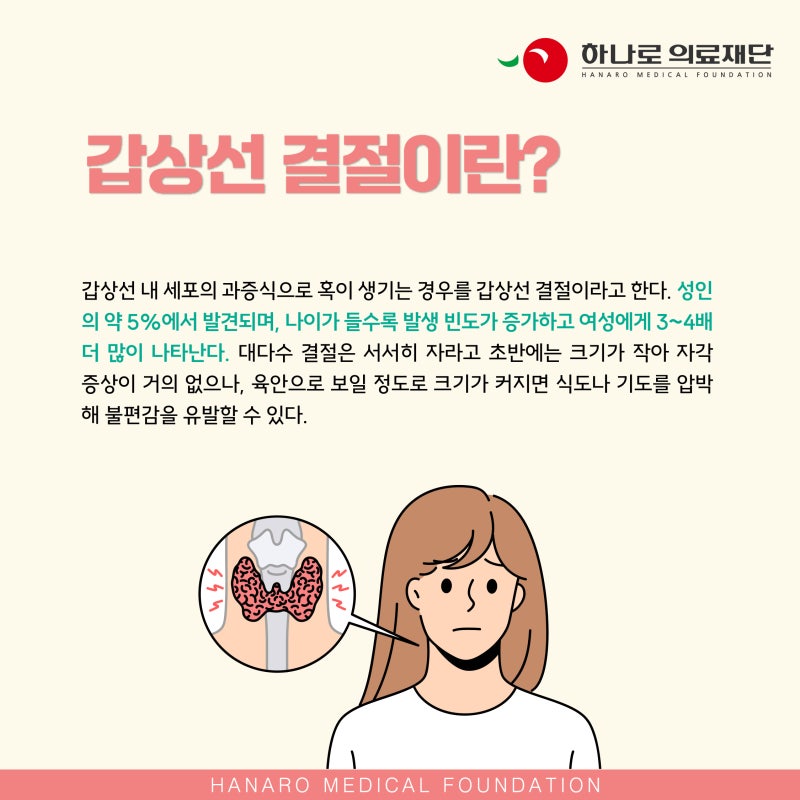
A thyroid nodule is a lump formed by the overgrowth of cells within the thyroid gland. They are found in about 5% of adults, with the frequency increasing with age, and they appear 3 to 4 times more often in women. Most nodules grow slowly and are small initially, causing almost no subjective symptoms. However, if they grow large enough to be visible to the naked eye, they can press on the esophagus or trachea, causing discomfort.
Thyroid Nodule Testing - ① Blood Test
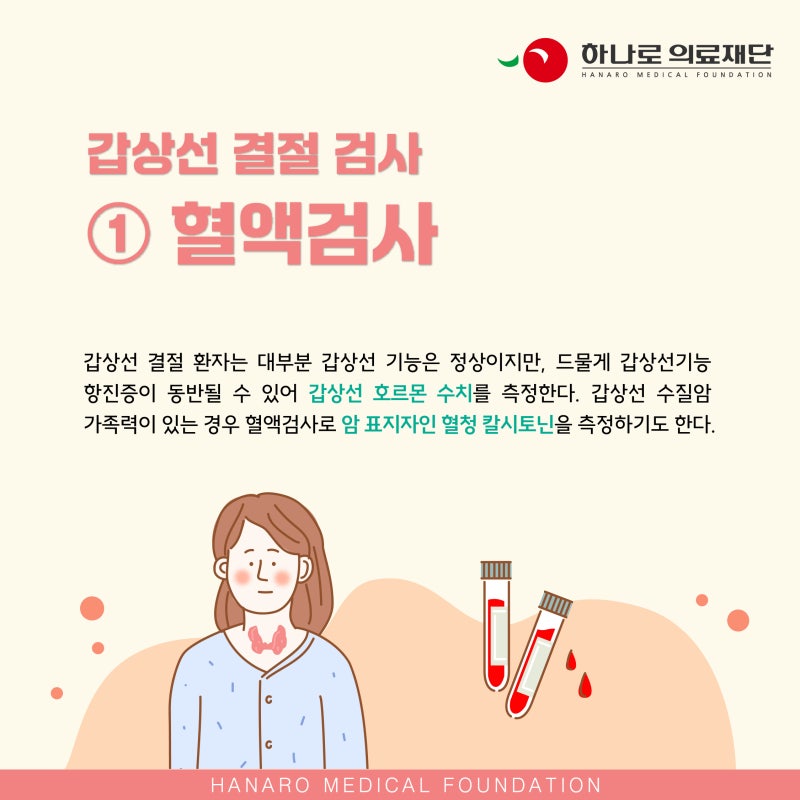
Most patients with thyroid nodules have normal thyroid function, but since hyperthyroidism can rarely coexist, thyroid hormone levels are measured. In cases where there is a family history of medullary thyroid cancer, serum calcitonin, a cancer marker, may also be measured via blood test.
Thyroid Nodule Testing - ② Thyroid Ultrasound
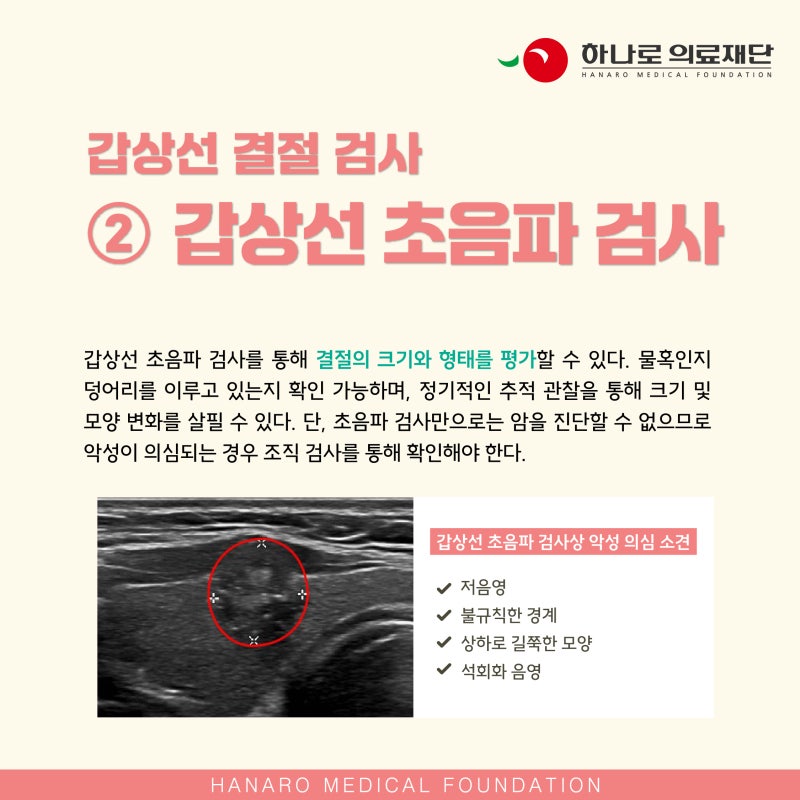
The size and shape of the nodule can be evaluated through a thyroid ultrasound. It can determine whether it is a cyst (fluid-filled) or a solid mass, and changes in size and shape can be monitored through regular follow-up observations. However, since ultrasound alone cannot diagnose cancer, a biopsy must be performed if malignancy is suspected.
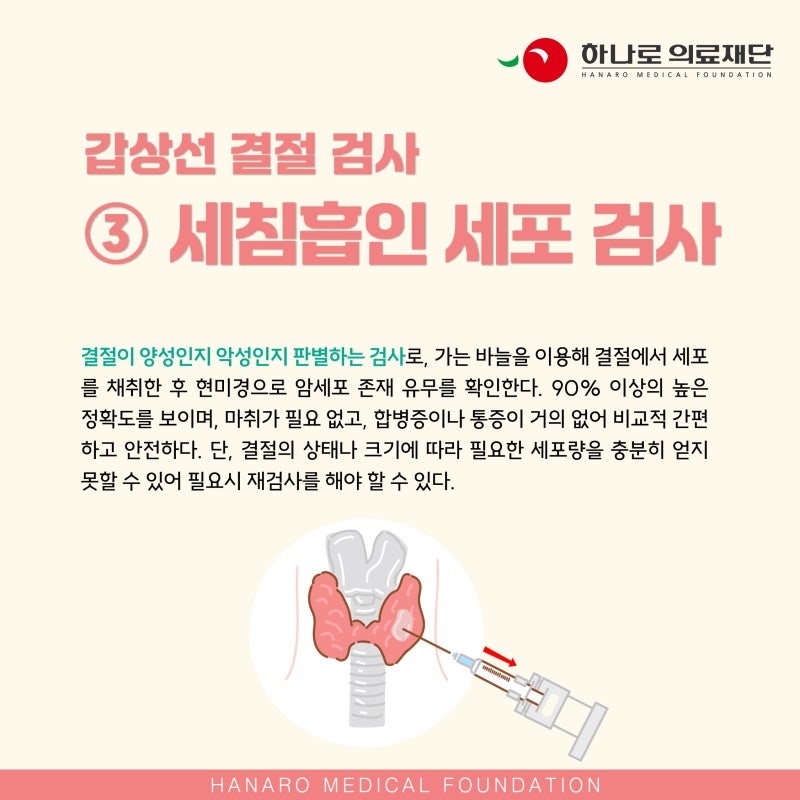
Thyroid Nodule Testing - ③ Fine Needle Aspiration (FNA) Cytology
This is a test to determine whether a nodule is benign or malignant. A thin needle is used to collect cells from the nodule, which are then examined under a microscope for the presence of cancer cells. It boasts a high accuracy rate of over 90%, requires no anesthesia, and is relatively simple and safe with almost no complications or pain. However, depending on the condition or size of the nodule, an insufficient amount of cells may be obtained, necessitating a retest if needed.
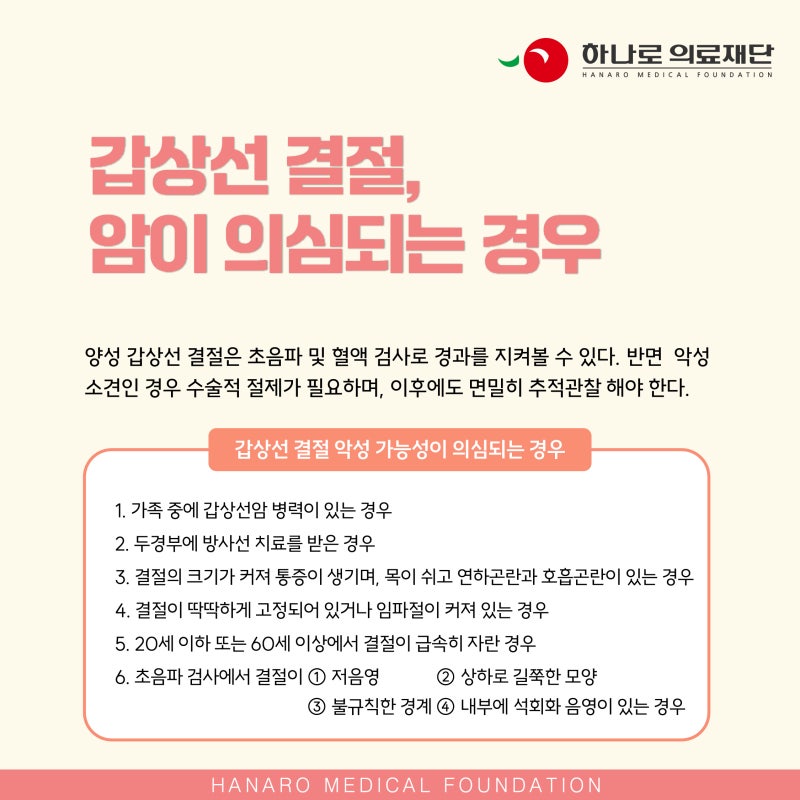
Cases Where Thyroid Cancer is Suspected
Benign thyroid nodules can be monitored through ultrasound and blood tests. However, if there are malignant findings, surgical resection is required, followed by close follow-up to monitor for recurrence.
Cases where malignancy is suspected |
1. Family history of thyroid cancer 2. History of radiation therapy to the head and neck 3. Nodule increases in size causing pain, hoarseness, difficulty swallowing, or difficulty breathing 4. Nodule is hard and fixed, or lymph nodes are enlarged 5. Rapid growth of a nodule in individuals under 20 or over 60 years old 6. Ultrasound findings of: ① Hypoechogenicity ② Taller-than-wide shape ③ Irregular margins ④ Internal calcifications |
This content is excerpted from a column by Dr. Eun-Jig Lee, an endocrinologist at Hanaro Medical Foundation, in the March issue of ‘Healthy Life,’ a monthly magazine by the Korea Public Health Association. Please refer to the column below for more details.
👇👇👇

To strengthen our expertise in treating endocrine diseases, Hanaro Medical Foundation Jongno Center has invited Professor Eun-Jig Lee, a leading authority on thyroid and pituitary diseases.
We provide specialized care for hypothyroidism/hyperthyroidism, thyroid tumors, pituitary and adrenal diseases, as well as various hormone therapies including anti-aging, childhood growth, thyroid hormones, adrenal corticosteroids, and male hormones. We look forward to your interest and support.
You can book an appointment with Dr. Eun-Jig Lee of the Endocrinology Department more quickly and easily through Naver Reservation.





#ThyroidNodule #ThyroidCancer #ThyroidUltrasound #FNACytology #HanaroMedicalFoundation #HanaroMedicalFoundationJongnoCenter
Frequently Asked Questions
If a thyroid nodule is found, is it always cancer?
No, the probability of a thyroid nodule being malignant (cancer) is only about 5% of all nodules. The majority are benign nodules that grow slowly, so it is important to consult a specialist to determine the exact condition through ultrasound and biopsy.
Can thyroid cancer be diagnosed with only an ultrasound?
No, cancer cannot be definitively diagnosed with only an ultrasound. Ultrasound is useful for evaluating the size, shape, and presence of cysts in a nodule, but if malignancy is suspected, additional tissue tests, such as fine-needle aspiration cytology, must be performed to confirm the presence of cancer cells.
Is fine-needle aspiration cytology very painful?
No, there is almost no pain or complications to the extent that anesthesia is not required. It is a relatively simple and safe test that collects cells from the nodule using a thin needle, and it shows a high diagnostic accuracy of over 90%.
What are the symptoms that suggest a thyroid nodule might be cancer?
If the nodule grows rapidly, causing pain, hoarseness, difficulty breathing, or difficulty swallowing, malignancy may be suspected. Also, caution is needed if the nodule is hard and fixed, or if irregular borders and calcification shadows are seen on ultrasound.
Who primarily gets thyroid nodules?
They are found in about 5% of adults, and are 3-4 times more common in women. Also, the incidence tends to increase with age, so it is recommended to check your thyroid condition through regular health check-ups.