2026-07-02
Testosterone Therapy: When It Is Essential and Precautions
Learn about testosterone therapy, when it is necessary for male hypogonadism, its different forms, potential side effects, and why it requires a specialist's diagnosis.
Testosterone Therapy: When It Is Essential and Precautions
Hello. This is Hanaro Medical Foundation, a health screening center in Jongno and Gangnam.
Recently, testosterone has been regarded as a symbol of masculinity and vitality. Some even promote testosterone agents as if they were ‘supplements’ that enhance sexual function and build muscle. However, the indiscriminate use of male hormone agents can lead to various side effects, including a decline in reproductive function. Today, Hanaro Medical Foundation will explore ‘when testosterone therapy is necessary and the precautions to take.’
Testosterone Deficiency: Male Hypogonadism
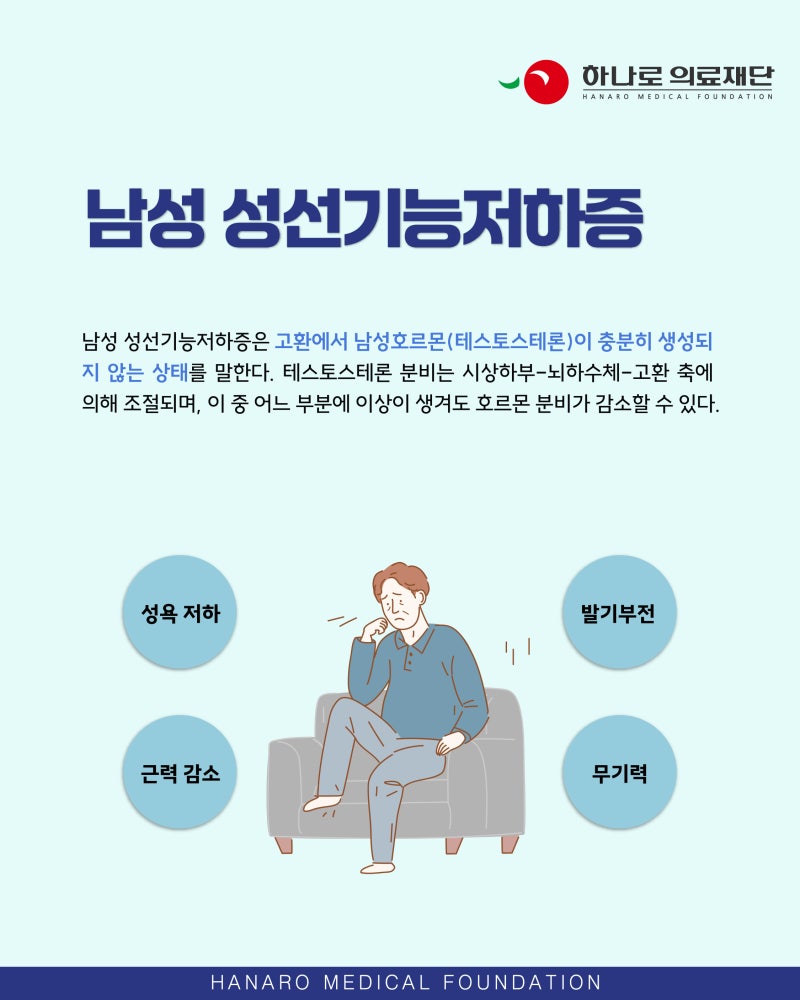
Male hypogonadism is a condition in which the testes do not produce enough male hormone (testosterone). This can lead to symptoms such as decreased libido, muscle loss, erectile dysfunction, and lethargy. Testosterone secretion is regulated by the hypothalamic-pituitary-gonadal axis, and an abnormality in any part of this system can cause a decrease in hormone secretion.
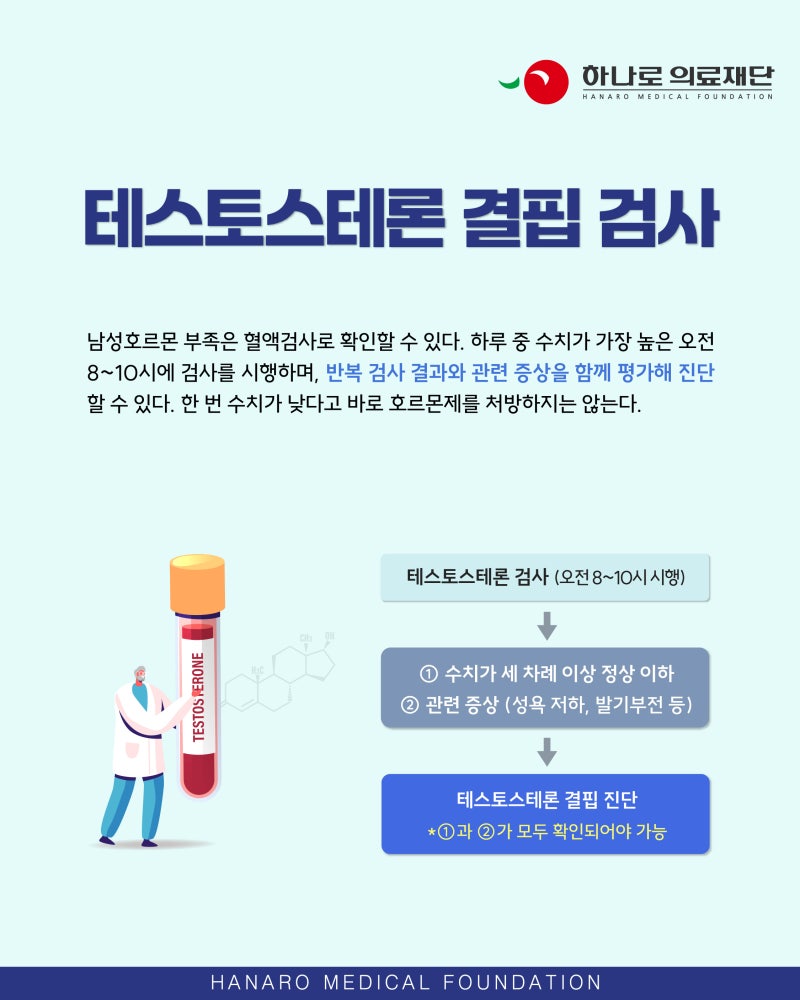
Testing for Testosterone Deficiency
A lack of male hormones is confirmed through a blood test. The test is typically performed between 8:00 AM and 10:00 AM, when levels are at their highest during the day. A diagnosis of testosterone deficiency can be made if the levels are below normal on three or more occasions and related symptoms are present. Hormone agents are not prescribed immediately just because the level is low once.
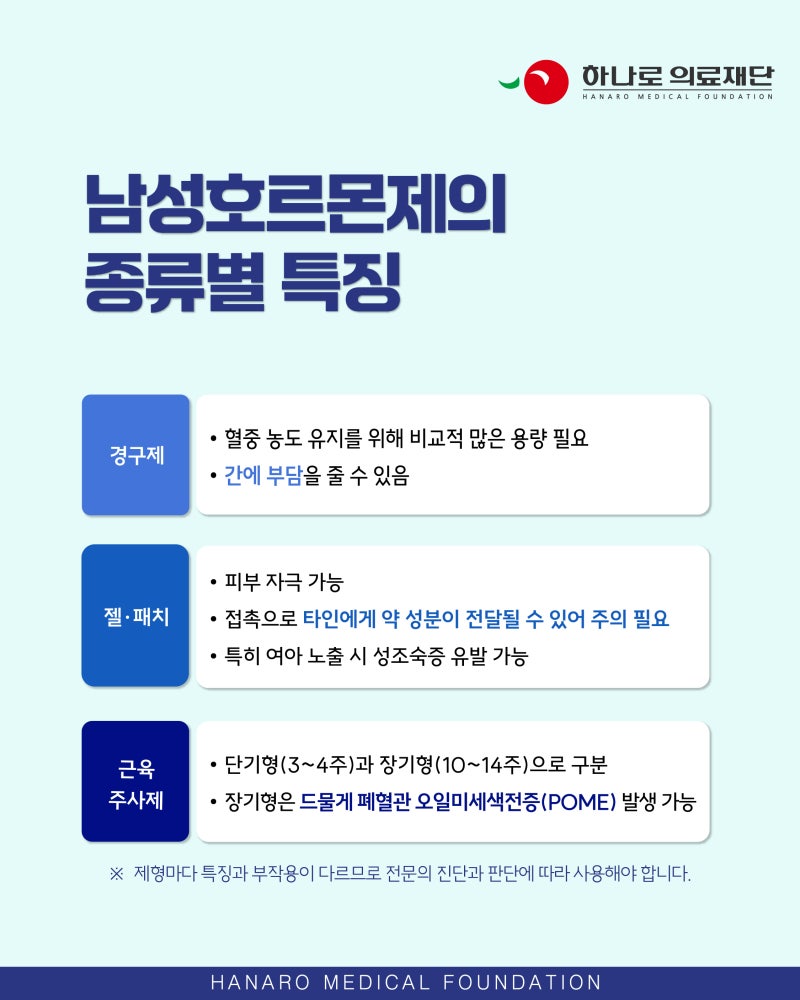
Characteristics of Different Testosterone Therapies
Testosterone preparations are available as oral medications, gels/patches, and intramuscular injections. Since each formulation has different characteristics and side effects, the appropriate type must be used based on a specialist’s judgment.
Oral Medications | • Require relatively high doses to maintain blood concentrations • Can place a burden on the liver |
Gels/Patches | • May cause skin irritation • Caution is needed as the medication can be transferred to others through physical contact • Can cause precocious puberty, especially if young girls are exposed |
Injections | • Divided into short-acting (3-4 weeks) and long-acting (10-14 weeks) forms • Long-acting forms can rarely cause pulmonary oil microembolism (POME) |
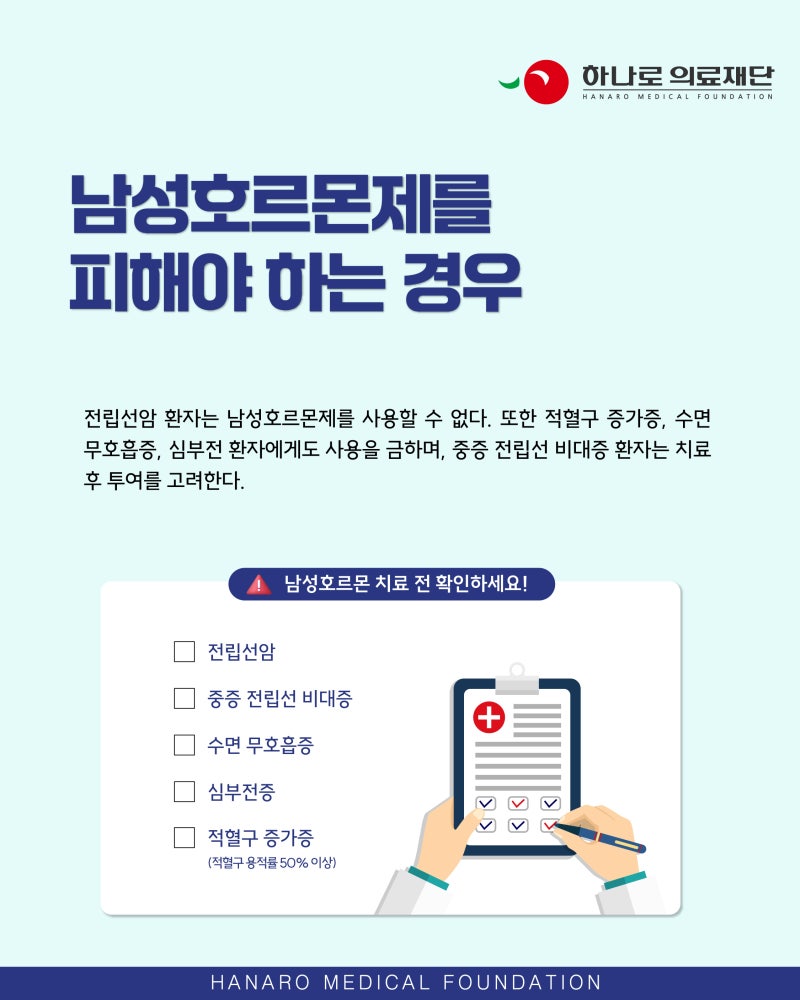
When to Avoid Testosterone Therapy
Patients with prostate cancer cannot use male hormone agents. Furthermore, its use is contraindicated in patients with polycythemia, sleep apnea, and heart failure. For patients with severe benign prostatic hyperplasia (BPH), administration is only considered after appropriate treatment.
✅ Prostate cancer
✅ Severe benign prostatic hyperplasia
✅ Sleep apnea
✅ Heart failure
✅ Polycythemia (hematocrit over 50%)
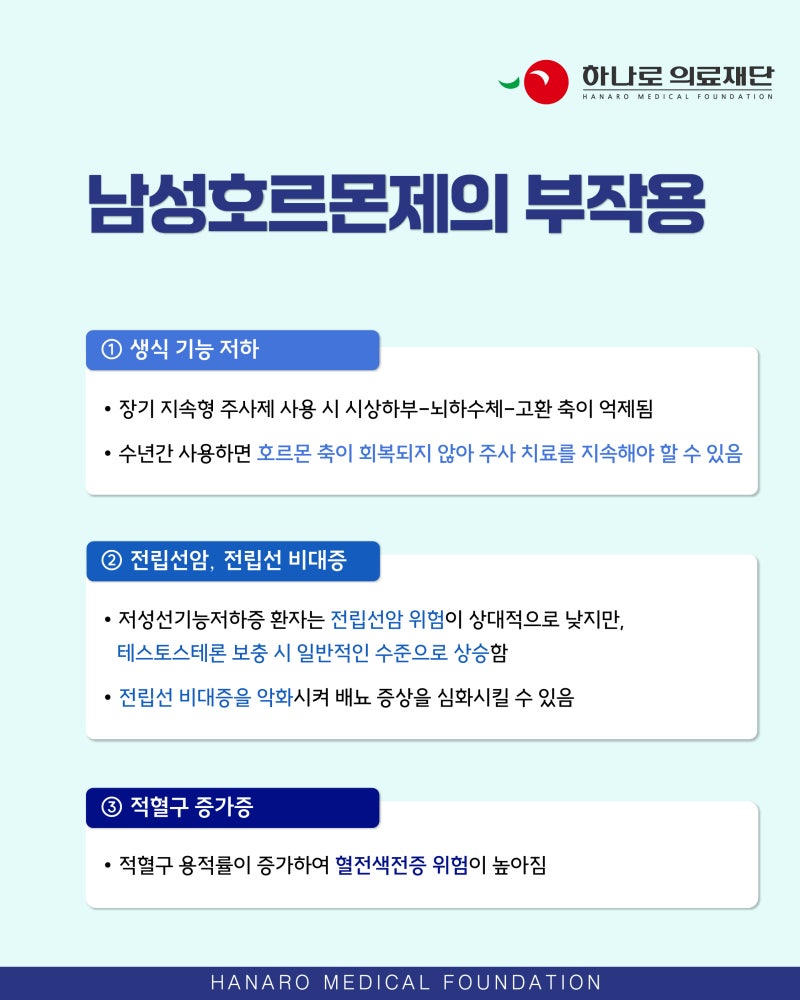
Major Side Effects of Testosterone Agents
✔️ Decline in Reproductive Function
- The use of long-acting injections suppresses the hypothalamic-pituitary-gonadal axis.
- If used for several years, the hormone axis may not recover, potentially requiring continuous injection therapy.
✔️ Prostate Cancer and Benign Prostatic Hyperplasia
- Patients with hypogonadism have a relatively lower risk of prostate cancer, but testosterone supplementation raises this risk to a normal level.
- It can exacerbate benign prostatic hyperplasia, worsening urinary symptoms.
✔️ Polycythemia
- An increase in hematocrit levels elevates the risk of thromboembolism.
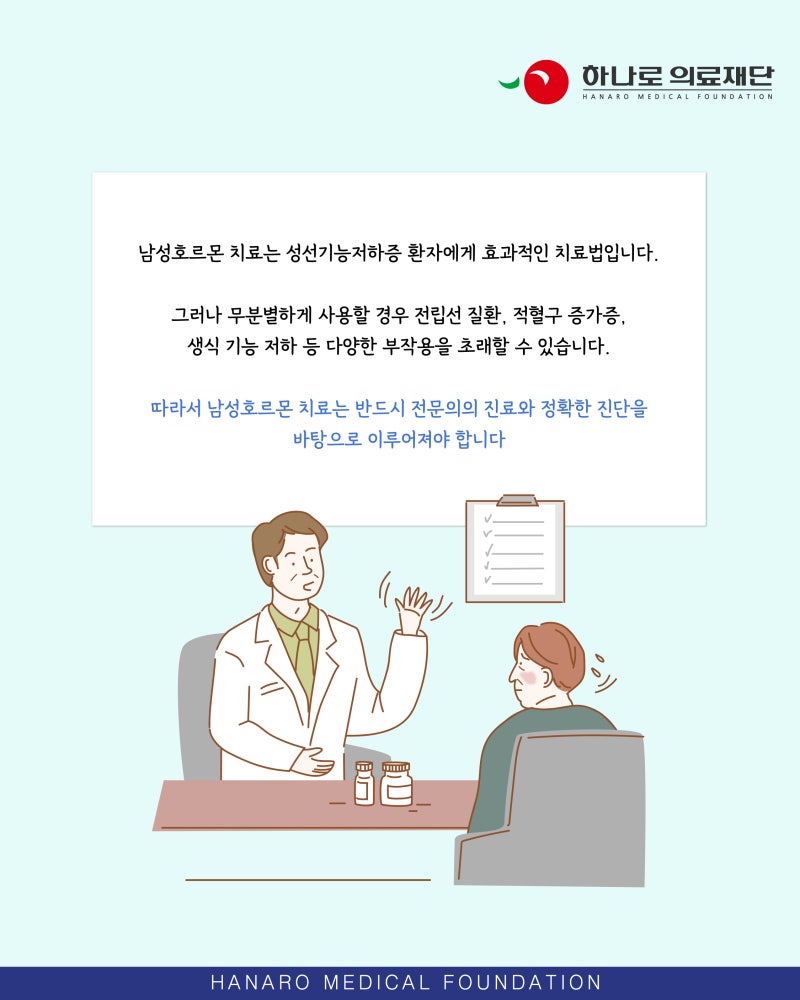
Testosterone therapy is an effective treatment for patients with hypogonadism.
However, indiscriminate use can lead to various side effects, including prostate diseases, polycythemia, and a decline in reproductive function.
Therefore, testosterone therapy must always be based on a specialist’s consultation and an accurate diagnosis.
This content is excerpted from a column by Dr. Eun-Jik Lee, an endocrinologist at Hanaro Medical Foundation, featured in the December issue of ‘Healthy Life,’ a monthly magazine by the Korean Public Health Association. For more details, please refer to the column below. 👇👇👇

To strengthen our expertise in treating endocrine disorders, Hanaro Medical Foundation Jongno Center has invited Professor Eun-Jik Lee, a leading authority on thyroid and pituitary diseases.
We focus on various hormone therapies, including treatments for hypothyroidism/hyperthyroidism, thyroid tumors, pituitary and adrenal diseases, as well as anti-aging, childhood growth, thyroid hormones, corticosteroids, and male hormones. We ask for your continued interest and support.
You can quickly and easily book an appointment with Dr. Eun-Jik Lee, Director of Endocrinology, through Naver Reservation.
#TestosteroneTherapy #MaleHormoneAgents #TestosteroneAgents #Hypogonadism #HanaroMedicalFoundation #HanaroMedicalFoundationJongnoCenter
Frequently Asked Questions
How is male hormone deficiency diagnosed?
It is confirmed through a blood test. The test is performed between 8 and 10 AM, when testosterone levels are highest, and a deficiency is diagnosed when levels are below normal on three or more occasions and related symptoms are present. A single low reading does not immediately lead to a prescription.
What types of male hormone treatments are available?
There are oral medications, gels/patches, and intramuscular injections. Oral medications can burden the liver, and gels/patches require caution as the drug components can be transferred to others. Injections are divided into short-acting and long-acting types, and the appropriate formulation is chosen based on a specialist's judgment.
Are there any diseases that should avoid male hormone therapy?
Yes, prostate cancer patients cannot use it. It is also prohibited for patients with polycythemia, sleep apnea, and heart failure, and for patients with severe benign prostatic hyperplasia, administration after treatment should be considered, so consultation with a specialist is essential.
Does long-term testosterone injection reduce reproductive function?
Yes, long-term use of long-acting injections for several years can reduce reproductive function. The hypothalamus-pituitary-gonadal axis may be suppressed, and the hormone axis may not recover, in which case injection treatment may need to be continued indefinitely.
What should I be aware of when using topical gel or patch-type hormone therapy?
Caution is required regarding contact with others. Skin irritation may occur, and there is a risk of drug components being transferred to others through contact. Special care is needed, especially if exposed to young girls, as it can cause precocious puberty.