2026-05-29
Persistent Numbness in Hands and Feet? Suspect ‘Peripheral Neuropathy’
Learn about peripheral neuropathy, a common cause of persistent numbness in hands and feet, including its types, causes, and diagnostic methods like EMG.
Persistent Numbness in Hands and Feet? Suspect ‘Peripheral Neuropathy’
Hello. This is Hanaro Medical Foundation, your health checkup center in Jongno and Gangnam.
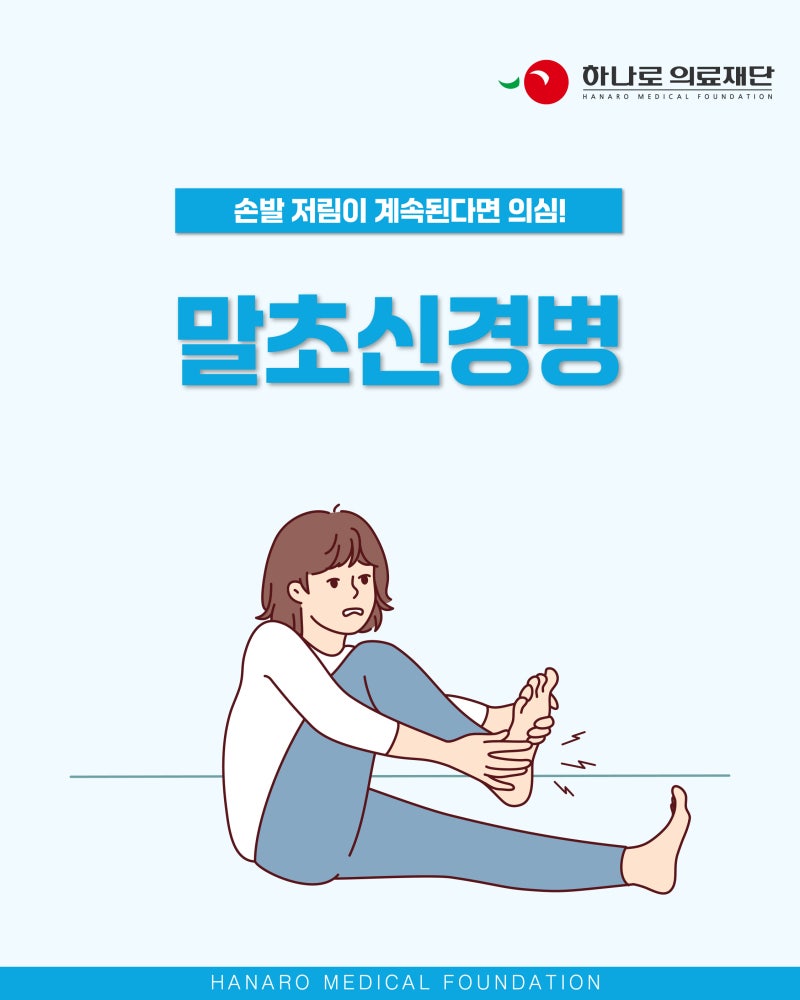
Numbness in the hands and feet is something everyone experiences at least once. While it is easy to blame poor blood circulation, in many cases, it is actually caused by abnormalities in the peripheral nerves.
Therefore, if numbness persists for a long time or recurs frequently, it is important to identify the underlying cause.
Today, Hanaro Medical Foundation will take a closer look at ‘peripheral neuropathy’.
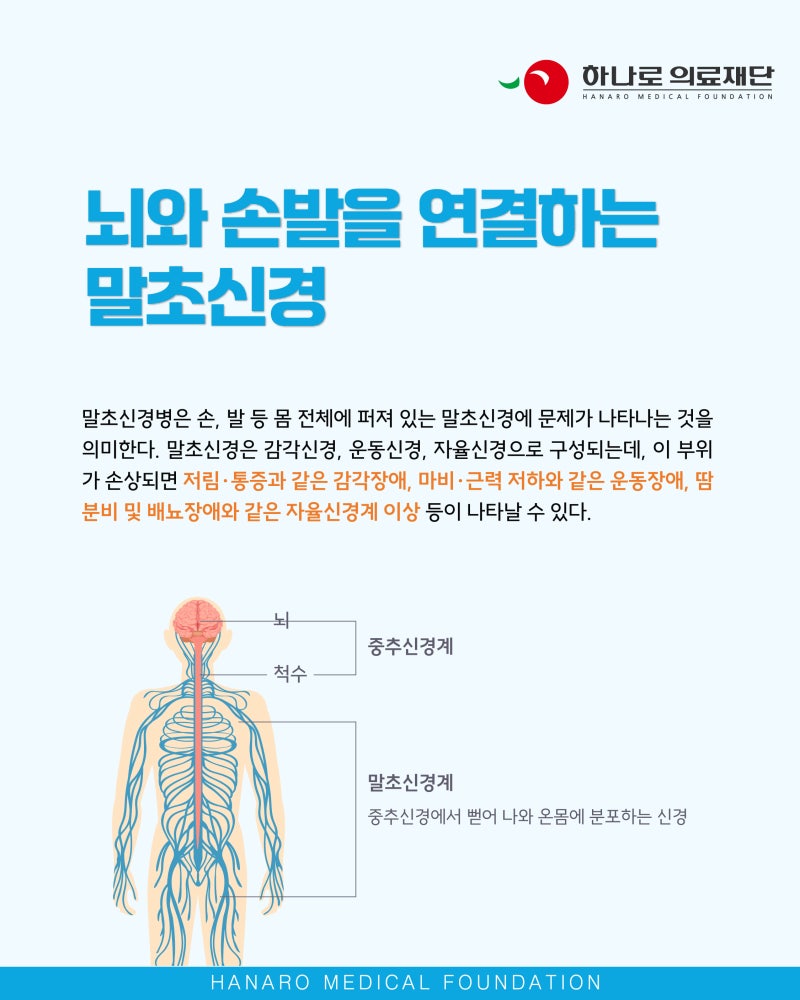
Peripheral Nerves: Connecting the Brain to the Hands and Feet
Peripheral neuropathy refers to problems occurring in the peripheral nerves spread throughout the body, including the hands and feet. Peripheral nerves consist of sensory, motor, and autonomic nerves. Damage to these areas can lead to sensory issues like numbness and pain, motor disorders such as paralysis or muscle weakness, and autonomic dysfunction like abnormal sweating or urinary problems.
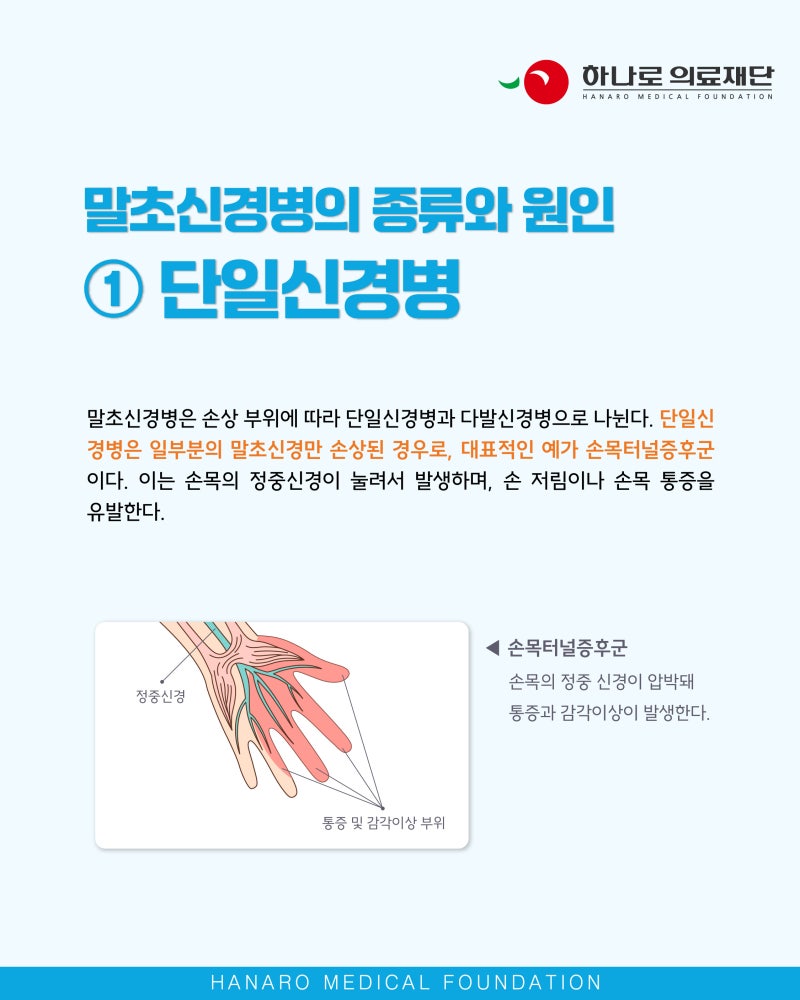
Types and Causes of Peripheral Neuropathy ① Mononeuropathy
Peripheral neuropathy is divided into mononeuropathy and polyneuropathy depending on the site of damage. Mononeuropathy occurs when only a specific peripheral nerve is damaged, with Carpal Tunnel Syndrome being a representative example. This is caused by compression of the median nerve in the wrist, leading to hand numbness or wrist pain.
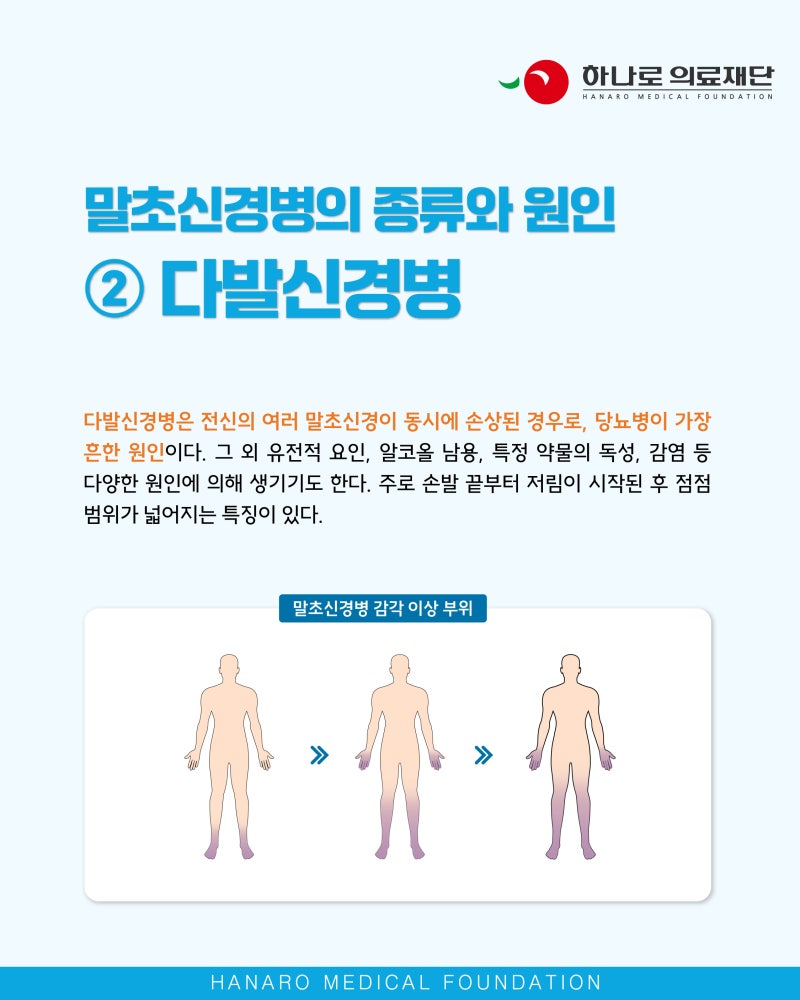
Types and Causes of Peripheral Neuropathy ② Polyneuropathy
Polyneuropathy occurs when multiple peripheral nerves throughout the body are damaged simultaneously, with diabetes being the most common cause. Other causes include genetic factors, alcohol abuse, toxicity from certain medications, and infections. It typically begins with numbness at the tips of the hands and feet, which gradually spreads over a wider area.

Accurate Diagnosis is the First Step to Treatment
Peripheral neuropathy has various causes, and treatment methods vary accordingly. For diagnosis, doctors check for underlying conditions that can cause peripheral neuropathy, such as diabetes, kidney disease, or rheumatism, and perform an Electromyography (EMG) test. An EMG measures the electrical activity of nerves and muscles to determine if motor and sensory symptoms are due to peripheral nerve issues. If necessary, additional tests such as blood tests, MRI, or CT scans may be performed.

Treatment and Management of Peripheral Neuropathy
If numbness in the hands and feet interferes with daily life, treatment is necessary. Symptom relief through medication is common, and procedures or surgery may also be considered. Diabetic neuropathy progression can be slowed through blood sugar management, and Carpal Tunnel Syndrome can be improved with steroid injections in the wrist or surgical procedures.

Hanaro Medical Foundation Gangnam Center 2 (Hanaro Leaders Healthcare) has invited Professor Choi Young-chul, who served as the Head of Neurology at Gangnam Severance Hospital.
He specializes in treating neurological diseases such as neuromuscular disorders, stroke, dementia and cognitive impairment, headaches, dizziness, and Parkinson’s disease.
We ask for our customers’ continued interest and support.

This content is an excerpt from the column by Neurologist Choi Young-chul of Hanaro Leaders Healthcare, published in the November issue of the Korea Public Health Association’s monthly magazine ‘Healthy Life’. You can find more details through the column link below. 👇👇👇






#PeripheralNeuropathy #HandAndFootNumbness #CarpalTunnelSyndrome #EMG #HanaroLeadersHealthcare

Frequently Asked Questions
What are the main causes of tingling in the hands and feet?
Peripheral nerve abnormalities are often the main cause. While it's easy to assume it's just a simple blood circulation problem, symptoms like tingling, pain, and numbness can occur due to peripheral neuropathy, which involves damage to sensory or motor nerves, so an accurate diagnosis is necessary.
What types of peripheral neuropathy are there?
It is divided into mononeuropathy and polyneuropathy depending on the site of damage. A typical example of mononeuropathy is carpal tunnel syndrome, which occurs when the median nerve is compressed, while polyneuropathy involves damage to multiple nerves throughout the body, with diabetes being the most common cause.
What tests are done to diagnose peripheral neuropathy?
Electromyography (EMG) is fundamentally performed. This test measures the electrical activity of nerves and muscles to determine if symptoms are due to a peripheral nerve problem. Additionally, to identify the cause, underlying diseases are checked, and if necessary, blood tests, MRI, and CT scans are performed.
How is peripheral neuropathy treated?
Treatment involves medication, procedures, or surgery depending on the cause and symptoms. Diabetic neuropathy can be slowed down with strict blood sugar management, and carpal tunnel syndrome can be improved with steroid injections into the wrist or through surgical procedures.