2026-05-29
Gangnam Urology: Flank Pain, Hematuria, and Urinary Stones
Learn about the symptoms, causes, and prevention of urinary stones, a condition known for causing severe flank pain and hematuria, especially during hot summer months.
Gangnam Urology: Flank Pain, Hematuria, and Urinary Stones
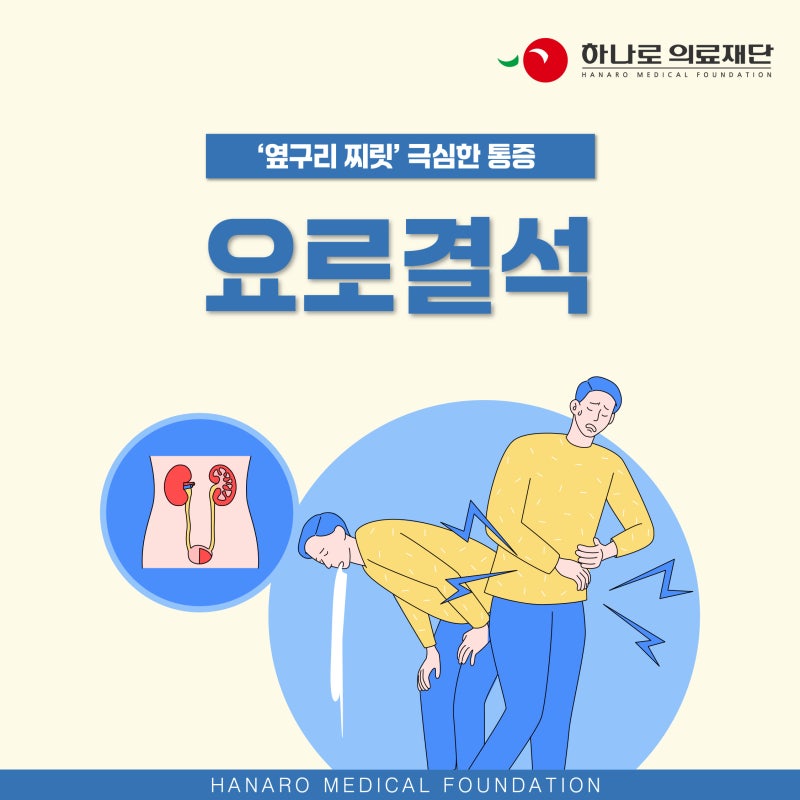
Hello. This is Hanaro Medical Foundation, your health checkup center and Gangnam urology specialist.
One of the urological conditions to watch out for as the weather gets hotter is ‘urinary stones’.
Urinary stones cause pain so severe it is often compared to the pain of childbirth. In summer, increased sweating leads to concentrated urine, creating an environment where stones can easily form. Today, Hanaro Medical Foundation Gangnam Urology will guide you through the ‘symptoms and prevention methods of urinary stones’.
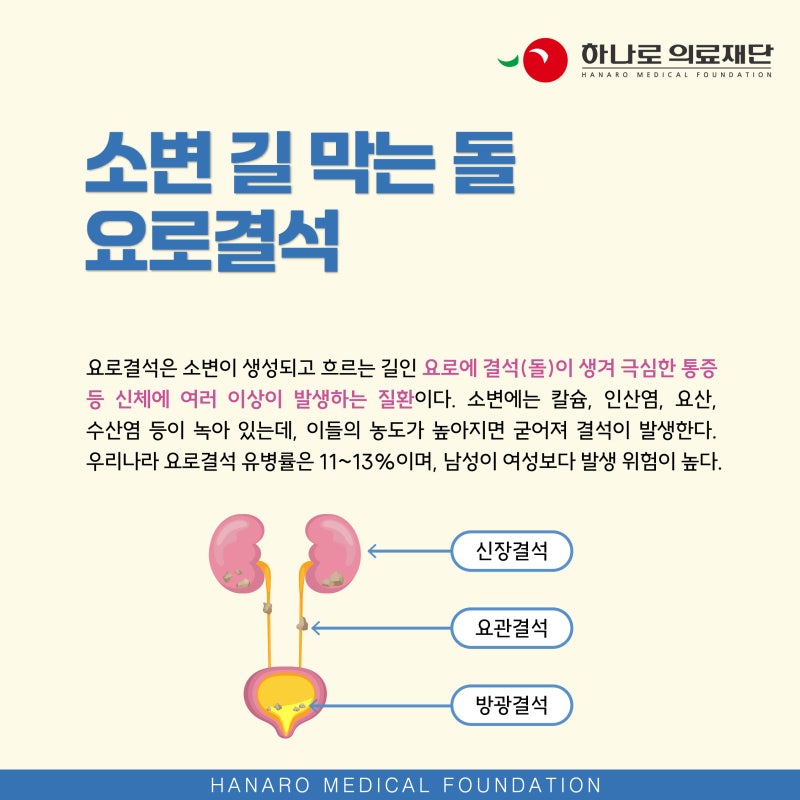
Urinary Stones: Stones Blocking the Urinary Tract
Urinary stones are a condition where calculi (stones) form in the urinary tract—the path where urine is produced and flows—causing extreme pain and various physical abnormalities. Urine contains dissolved calcium, phosphate, uric acid, and oxalate; when their concentration becomes too high, they solidify into stones. The prevalence rate of urinary stones in Korea is 11–13%, with men facing a higher risk than women.
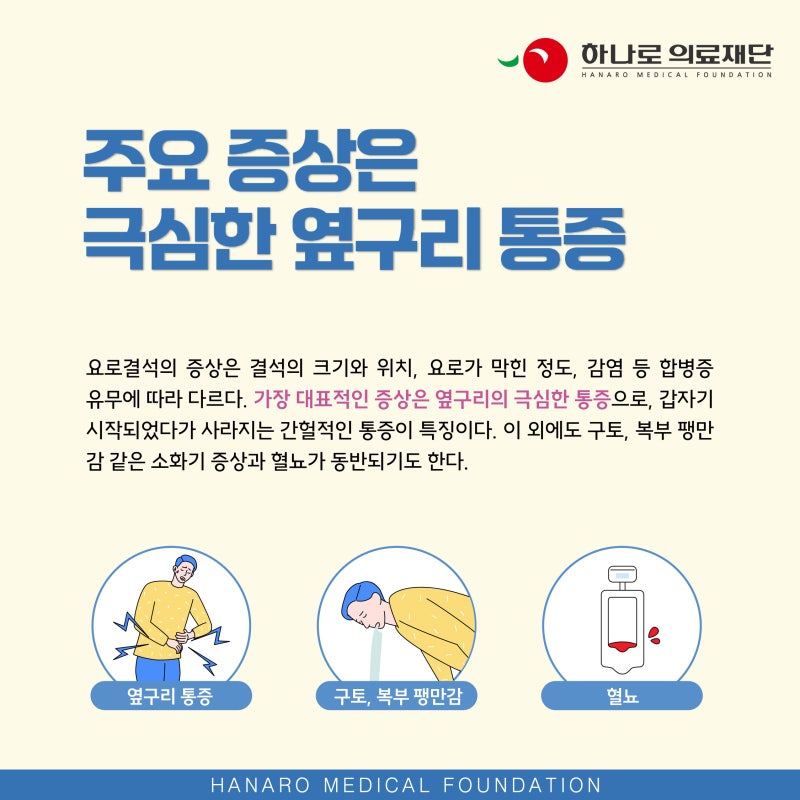
Extreme Flank Pain and Hematuria
Symptoms of urinary stones vary depending on the size and location of the stone, the degree of blockage, and the presence of complications like infection. The most representative symptom is extreme flank pain, characterized by intermittent pain that starts suddenly and then subsides. Other symptoms include digestive issues like vomiting and abdominal bloating, as well as hematuria (blood in the urine). If you experience suspicious symptoms, you should consult a urology expert.
Major Symptoms of Urinary Stones: ✔ Flank pain ✔ Vomiting, abdominal bloating ✔ Hematuria
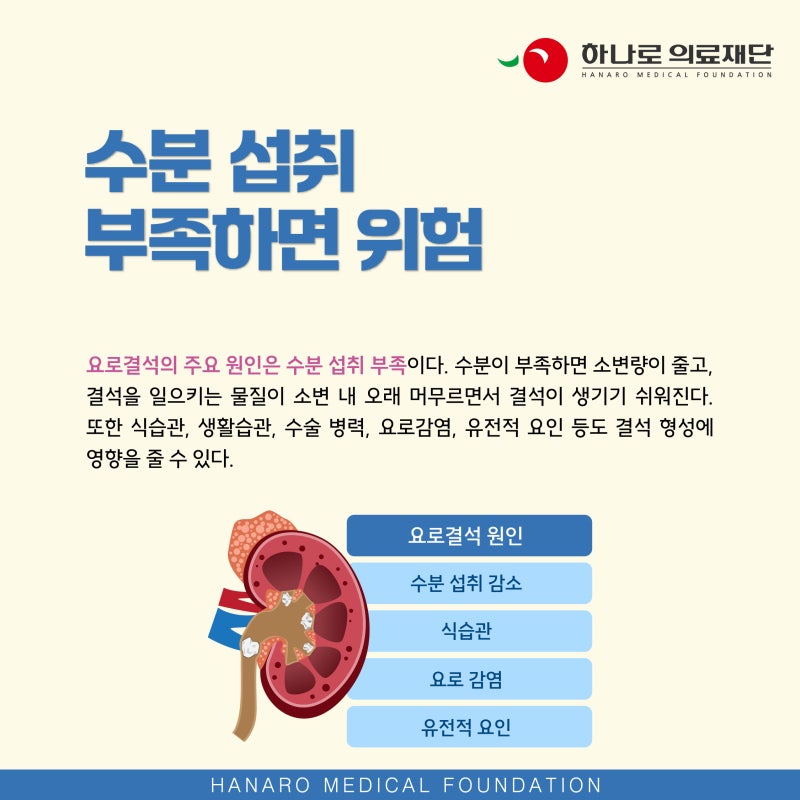
Risk Increases with Insufficient Hydration
The primary cause of urinary stones is insufficient water intake. Lack of hydration reduces urine volume, allowing stone-forming substances to stay in the urine longer and crystallize. During the summer when sweating is frequent, the number of people seeking treatment at Gangnam urology clinics for urinary stones increases. Additionally, dietary habits, lifestyle, surgical history, urinary tract infections, and genetic factors can influence stone formation.

Importance of Early Diagnosis and Regular Checkups
If you have symptoms suggestive of urinary stones, it is advisable to visit a urology specialist for appropriate testing and consultation, including urine tests, X-rays, ultrasounds, or CT scans. Furthermore, because urinary stones have a high recurrence rate, continuous management through regular checkups and lifestyle improvements is necessary even after treatment.
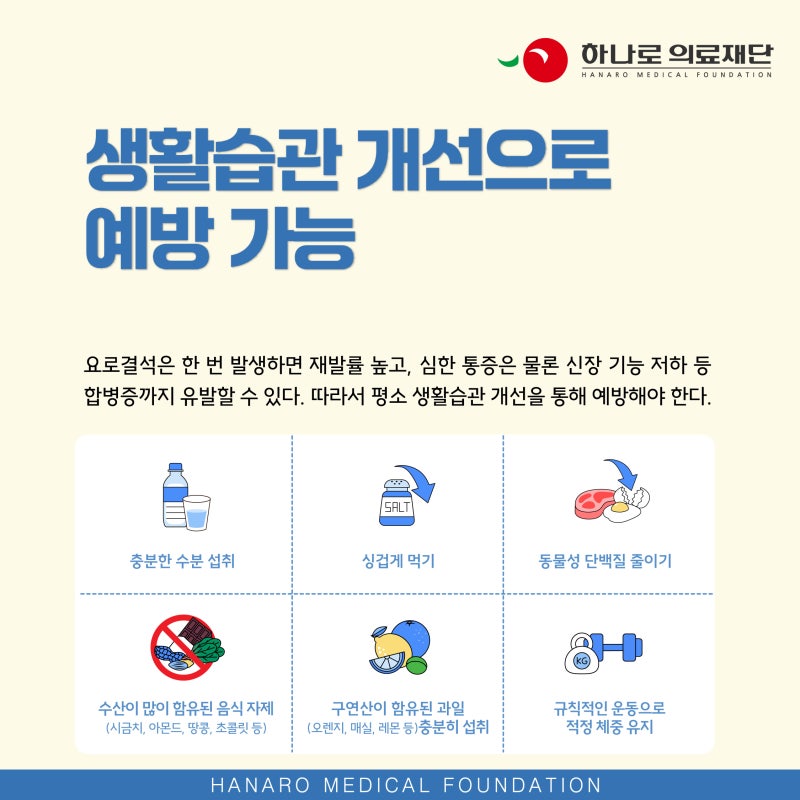
Prevention Possible Through Lifestyle Changes
Once they occur, urinary stones have a high recurrence rate and can cause not only severe pain but also complications such as decreased kidney function. Therefore, prevention through daily lifestyle improvements is crucial.
✅ Drink plenty of water
✅ Maintain a low-sodium diet
✅ Reduce animal protein intake
✅ Avoid foods high in oxalates (spinach, almonds, peanuts, chocolate, etc.)
✅ Consume plenty of fruits containing citric acid (oranges, plums, lemons, etc.)
✅ Maintain a healthy weight through regular exercise

At Hanaro Medical Foundation (Gangnam),
We have invited Professor Byung Ha Chung, who previously served as the Head of Urology and Team Leader of the Prostate Cancer Clinic at Gangnam Severance Hospital.
He focuses on treating urological diseases such as prostate cancer, benign prostatic hyperplasia (BPH), bladder cancer, and kidney cancer. We invite patients concerned about these conditions to seek his expertise.
You can book an appointment with Director Byung Ha Chung of the Urology Center quickly and easily through Naver Reservation.







#UrinaryStones #FlankPain #Hematuria #HanaroMedicalFoundation
Frequently Asked Questions
What is the most common symptom of urolithiasis?
The most common symptom is intermittent and severe flank pain that starts suddenly and then disappears. In addition, digestive symptoms such as vomiting or abdominal bloating and hematuria may accompany it, so if you have suspicious symptoms, you should consult a urologist.
Why is urolithiasis more common in summer?
It is because increased sweating leads to concentrated urine. When there is insufficient water, the amount of urine decreases, and substances that cause stones stay in the urine for a long time, creating an environment where stones are easily formed.
What foods should I avoid to prevent urolithiasis?
You should refrain from foods high in oxalate, such as spinach, almonds, peanuts, and chocolate. It is also good to reduce animal protein intake and eat bland foods, and consuming enough fruits containing citric acid, such as oranges and lemons, helps prevent it.
Can urolithiasis recur after treatment?
Yes, urolithiasis is a disease with a very high recurrence rate once it occurs. Therefore, even after treatment, regular check-ups are necessary, and continuous lifestyle management, such as sufficient fluid intake and dietary habit improvement, is essential.