2026-05-29
Gangnam Urology: Benign Prostatic Hyperplasia (BPH) Symptoms and Precautions
Learn about Benign Prostatic Hyperplasia (BPH), a common condition in men over 50. Discover symptoms, causes, treatments, and self-diagnosis tips from Hanaro Medical Foundation.
Gangnam Urology: Benign Prostatic Hyperplasia (BPH) Symptoms and Precautions
Hello. This is Hanaro Medical Foundation, your Gangnam Urology and Health Checkup Center.
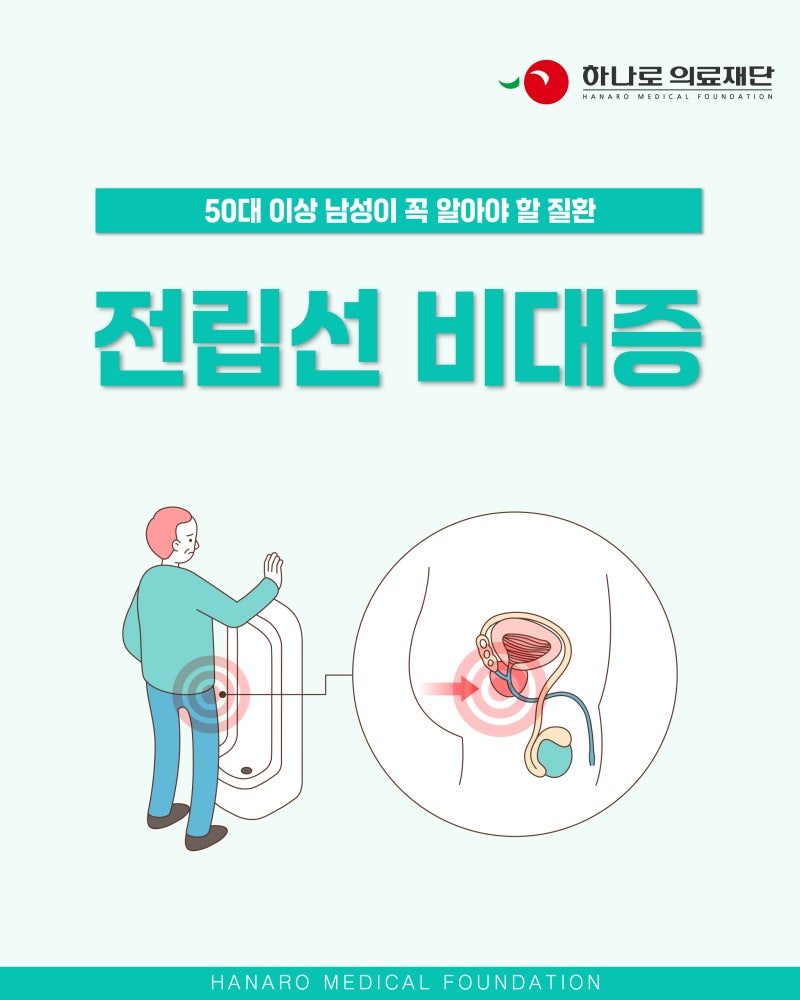
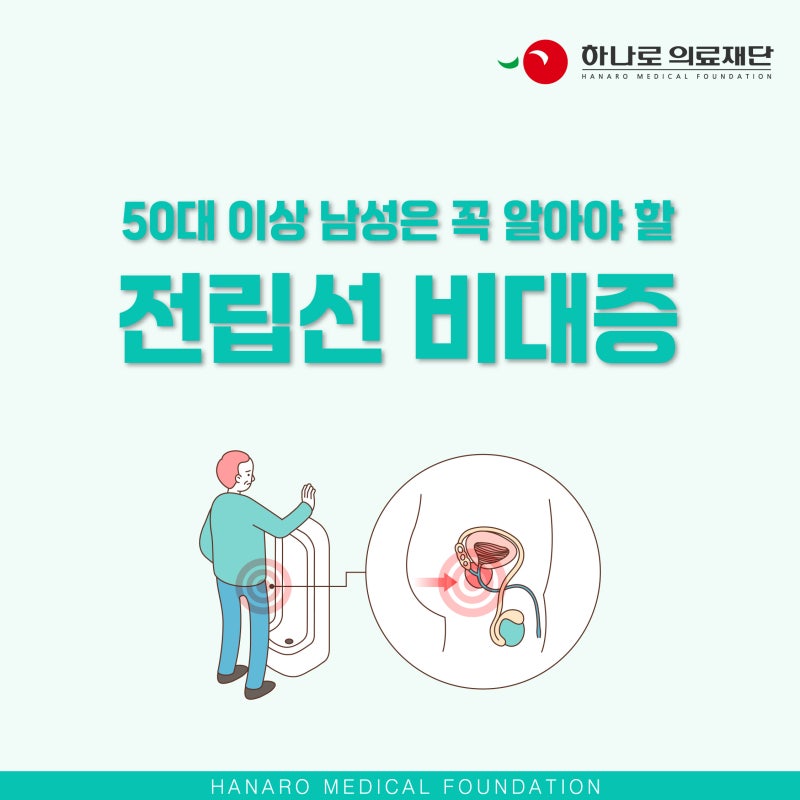
A common condition among men in their 50s and older is Benign Prostatic Hyperplasia (BPH). The reason prostate enlargement becomes a problem is that it causes discomfort related to urination.
BPH is directly linked not only to health but also to quality of life, making early detection and treatment essential.
Today, Hanaro Medical Foundation will explore ‘Benign Prostatic Hyperplasia’, a condition that middle-aged men must be aware of.
What is Benign Prostatic Hyperplasia (BPH)?
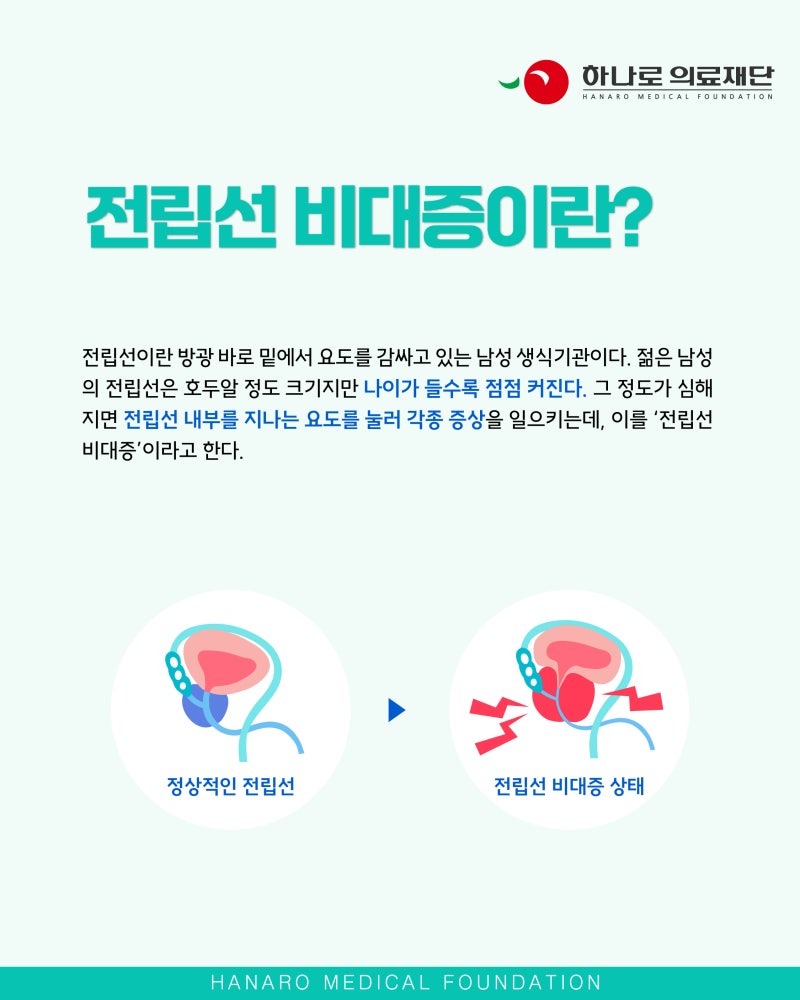
The prostate is a male reproductive organ located just below the bladder, surrounding the urethra. In young men, the prostate is about the size of a walnut, but it gradually grows larger with age. When this enlargement becomes severe, it compresses the urethra passing through the prostate, causing various symptoms. This is known as ‘Benign Prostatic Hyperplasia’.
Causes of Benign Prostatic Hyperplasia
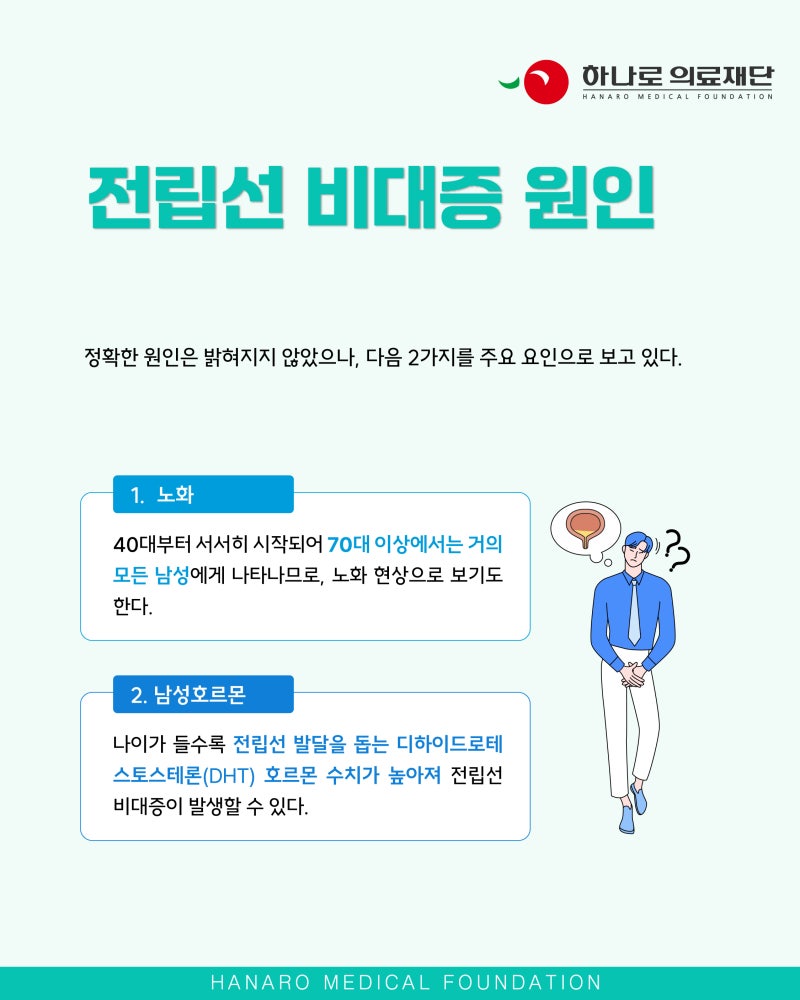
While the exact cause is unknown, aging and male hormones are considered the primary triggers.
Aging | It begins gradually in the 40s and appears in almost all men aged 70 and older, so it is often viewed as a natural aging phenomenon. |
Male Hormones | As men age, levels of Dihydrotestosterone (DHT), a hormone that aids prostate development, may increase, leading to BPH. |
Symptoms of Benign Prostatic Hyperplasia
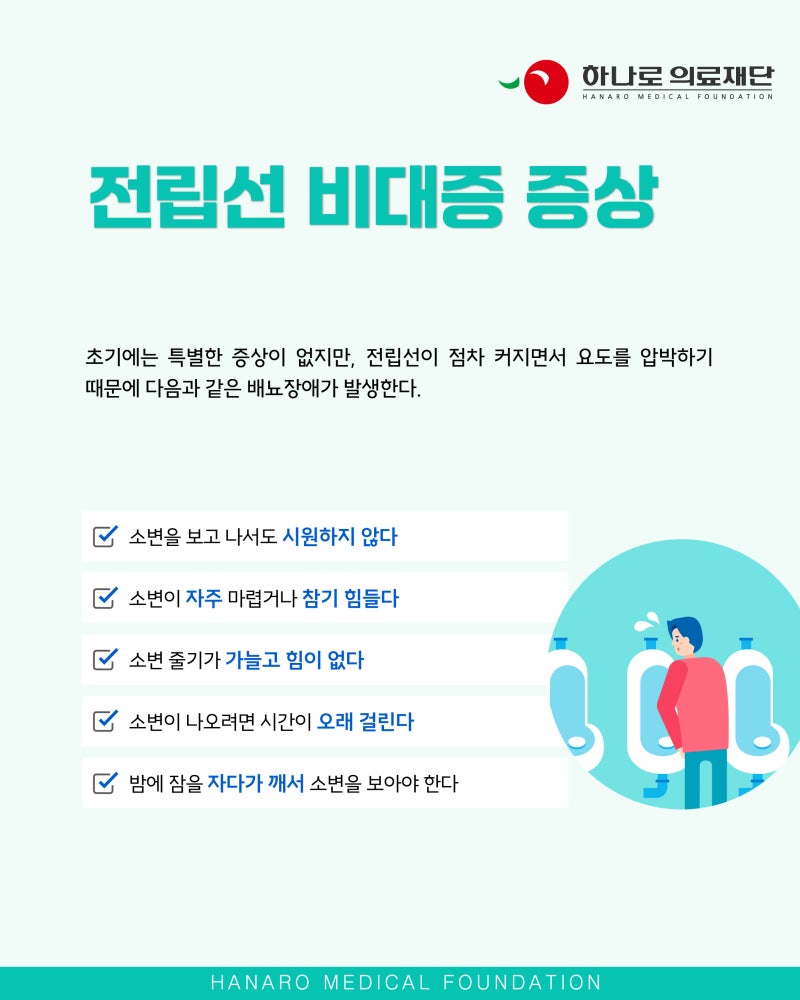
There are no specific symptoms in the early stages, but as the prostate grows and compresses the urethra, the following urinary disorders occur. If you suspect BPH based on these symptoms, we recommend seeking a consultation at a Gangnam urology clinic.
✅ Feeling that the bladder is not completely empty after urinating
✅ Frequent or urgent need to urinate
✅ Weak or thin urinary stream
✅ Taking a long time for urine to start flowing
✅ Waking up during the night to urinate (nocturia)
How is Benign Prostatic Hyperplasia Treated?
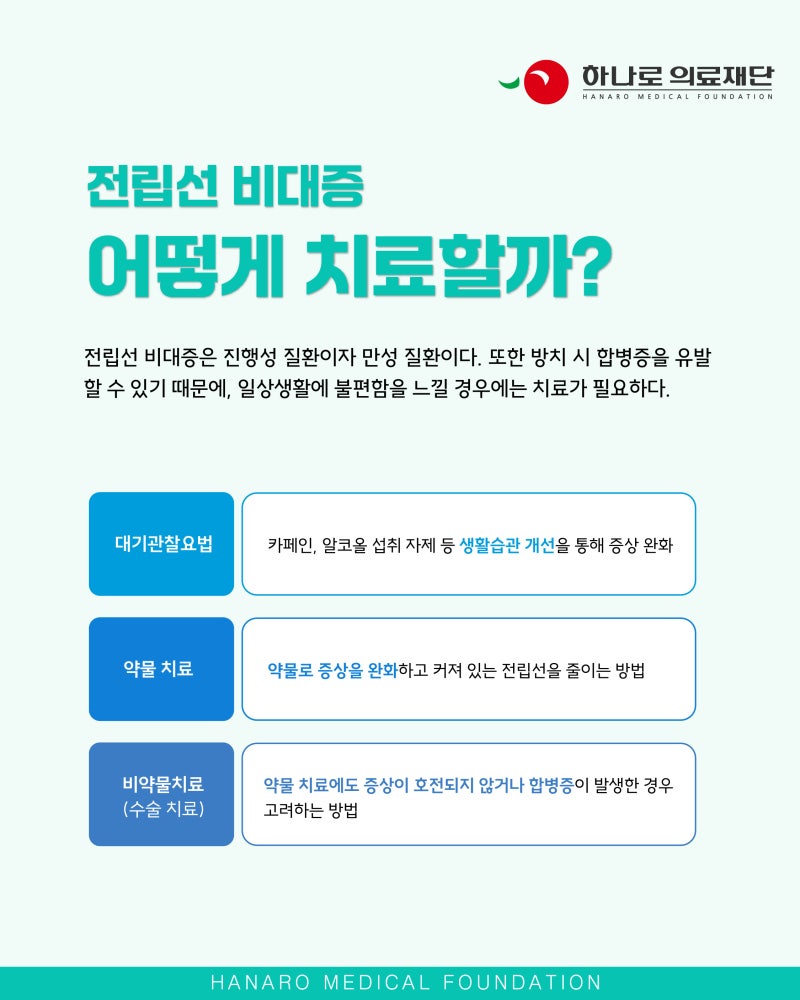
BPH is a progressive and chronic condition. If left untreated, it can lead to various complications. Therefore, if you experience discomfort in daily life, treatment at Gangnam Urology is necessary.
Watchful Waiting | Alleviating symptoms through lifestyle improvements such as reducing caffeine and alcohol intake. |
Medication | Relieving symptoms and reducing the size of the enlarged prostate through medication. |
Surgical Treatment | Considered when symptoms do not improve with medication or when complications occur. |
Precautions for Patients with BPH
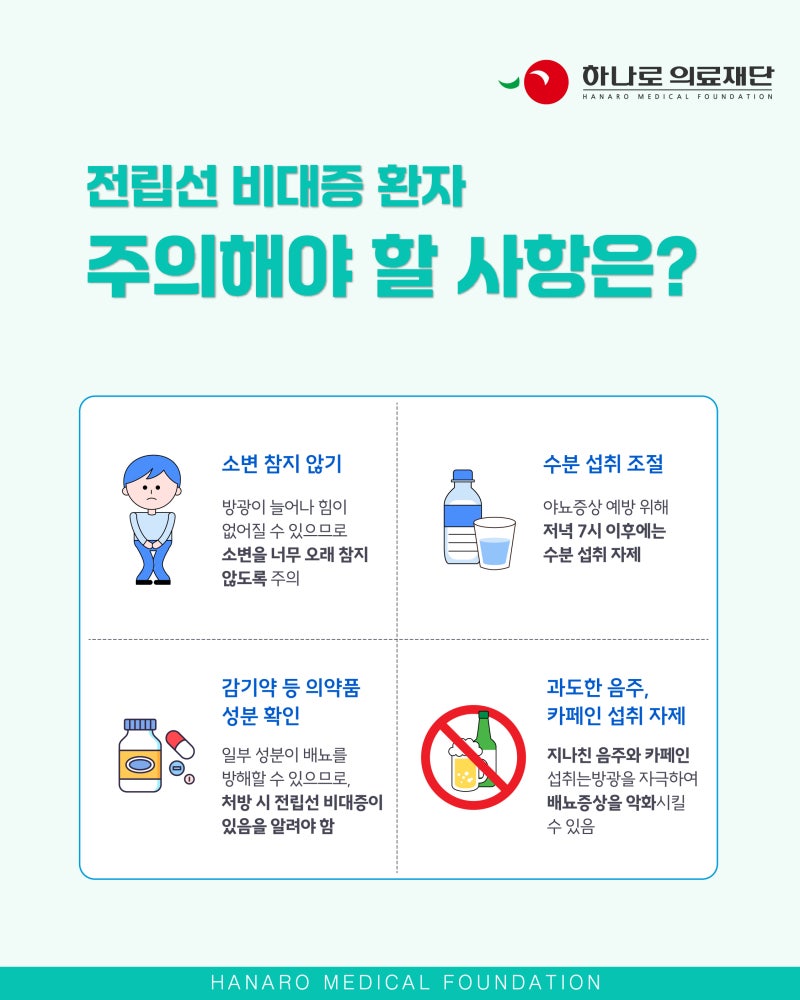
✅ Do not hold your urine
Be careful not to hold urine for too long, as the bladder can overstretch and lose its muscle tone.
✅ Limit excessive alcohol and caffeine
Excessive drinking should be avoided as it irritates the bladder and worsens urinary symptoms. Avoid strong tea or coffee if possible.
✅ Check ingredients in cold medicines
Certain ingredients in cold medicines can impair urinary function. Always inform your doctor that you have BPH when being prescribed cold medication.
✅ Manage fluid intake
Excessive fluid intake before bed worsens nocturia, so try to limit fluids after 7 PM.
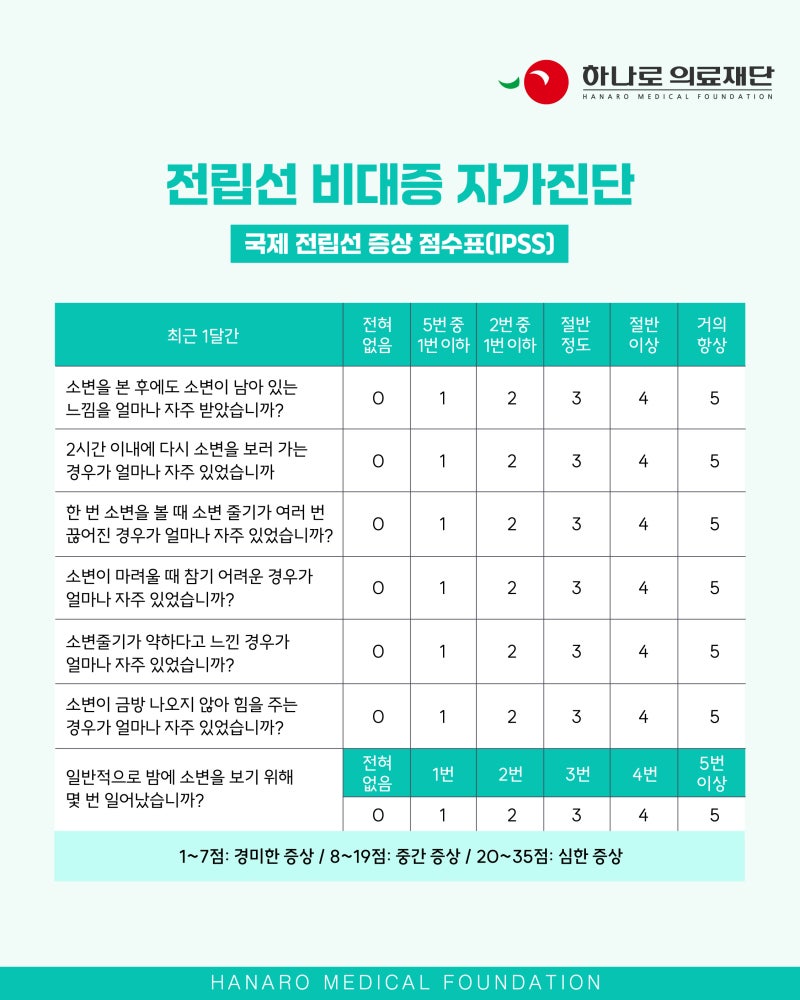
BPH Self-Diagnosis - International Prostate Symptom Score (IPSS)
BPH Self-Diagnosis International Prostate Symptom Score (IPSS) | |||||||
Over the past month | Not at all | Less than 1 in 5 times | Less than half the time | About half the time | More than half the time | Almost always | |
1 | How often have you had the sensation of not emptying your bladder completely? | 0 | 1 | 2 | 3 | 4 | 5 |
2 | How often have you had to urinate again less than 2 hours after you finished urinating? | 0 | 1 | 2 | 3 | 4 | 5 |
3 | How often have you found you stopped and started again several times when you urinated? | 0 | 1 | 2 | 3 | 4 | 5 |
4 | How often have you found it difficult to postpone urination? | 0 | 1 | 2 | 3 | 4 | 5 |
5 | How often have you had a weak urinary stream? | 0 | 1 | 2 | 3 | 4 | 5 |
6 | How often have you had to push or strain to begin urination? | 0 | 1 | 2 | 3 | 4 | 5 |
7 | How many times did you typically get up to urinate from the time you went to bed until the time you got up in the morning? | None | 1 time | 2 times | 3 times | 4 times | 5 or more |
0 | 1 | 2 | 3 | 4 | 5 | ||
1~7: Mild / 8~19: Moderate / 20~35: Severe | |||||||

At Hanaro Medical Foundation (Gangnam),
we have invited Professor Chung Byung-ha, who formerly served as the Head of Urology and Team Leader of the Prostate Cancer Clinic at Gangnam Severance Hospital.
We focus on treating urological conditions such as prostate cancer, BPH, bladder cancer, and kidney cancer. We invite patients concerned about these conditions to seek our expert care.
You can quickly and easily schedule an appointment with Director Chung Byung-ha of the Urology Department through Naver Reservation.

#BPH #UrinaryDisorder #HanaroMedicalFoundation #HanaroMedicalFoundationGangnam #HanaroLeadersClinic




Frequently Asked Questions
What are the main causes of benign prostatic hyperplasia (BPH)?
Aging and male hormones are considered the biggest causes. It is an aging phenomenon that gradually begins in men in their 40s and appears in most men over 70, and can occur as DHT hormone levels, which help prostate development, increase with age.
What are the symptoms that may suggest benign prostatic hyperplasia (BPH)?
Typical symptoms include a feeling of incomplete emptying after urination, frequent urination, and a thin, weak urine stream. It is also advisable to seek medical attention if it takes a long time for urine to come out or if you wake up at night to urinate (nocturia).
How is benign prostatic hyperplasia (BPH) treated?
Treatment involves watchful waiting, medication, or surgery, depending on the symptoms. In the early stages, symptoms are alleviated through lifestyle changes, and if necessary, medication is used to reduce prostate size. If medication does not improve the condition or complications occur, surgical treatment is considered.
Can patients with benign prostatic hyperplasia (BPH) take cold medicine?
Yes, it is possible, but you must inform your doctor that you have benign prostatic hyperplasia. Some ingredients in cold medicine can impair urinary function and worsen symptoms, so special caution is needed when prescribing.
How can I reduce nocturia symptoms?
It is advisable to refrain from fluid intake after 7 PM. Drinking too much water before bed can worsen nocturia symptoms, causing you to wake up at night to urinate, so you should control your fluid intake in the evening.