2026-05-29
Rathke's Cleft Cyst: Another Cause of Headaches
Learn about Rathke's Cleft Cyst, a common pituitary lesion that can cause headaches and vision issues, and the importance of early detection through MRI.
Rathke‘s Cleft Cyst: Another Cause of Headaches
Hello. This is Hanaro Medical Foundation, your health checkup center in Jongno and Gangnam.
When symptoms like headaches, irregular menstruation, or visual disturbances occur, most people first think of visiting a neurologist, gynecologist, or ophthalmologist.
However, these symptoms can also be caused by abnormalities in the endocrine system, specifically ‘pituitary gland diseases’.
The most common tumor occurring in the pituitary gland is a pituitary adenoma, but others include Rathke‘s cleft cysts and craniopharyngiomas.
In particular, Rathke‘s cleft cysts are often asymptomatic and are frequently discovered during brain MRI scans as part of a regular health checkup.
Today, Hanaro Medical Foundation will explore another cause of headaches: the ‘symptoms and diagnostic methods for Rathke‘s cleft cysts’.
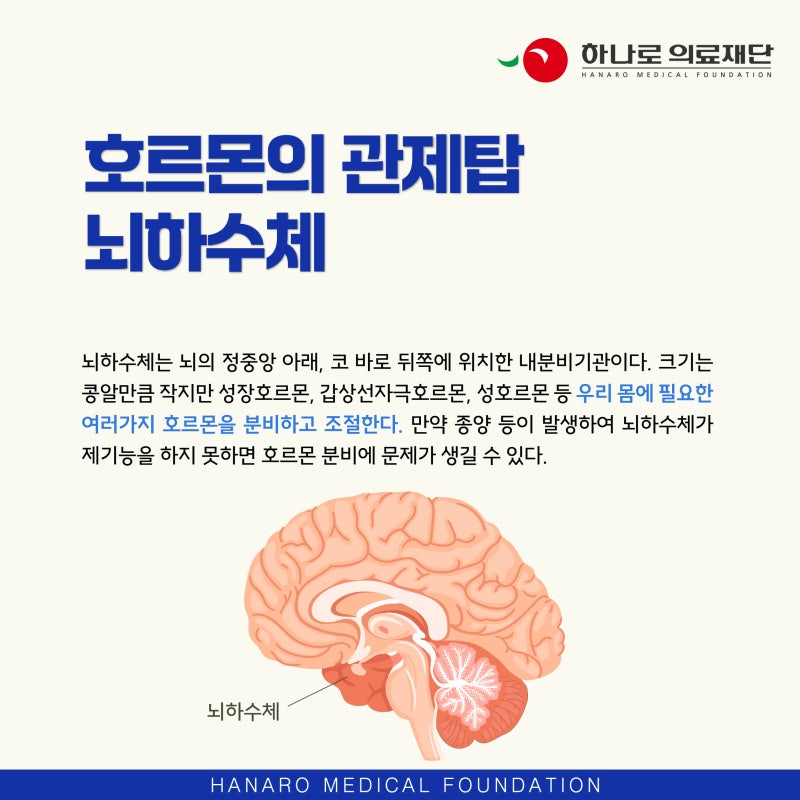
The ‘Hormone Control Tower’: The Pituitary Gland
The pituitary gland is an endocrine organ located at the base of the brain, right in the center and behind the nose. Although it is as small as a pea, it secretes and regulates various hormones essential for our body, such as growth hormone, thyroid-stimulating hormone, and sex hormones. If a tumor or other issue prevents the pituitary gland from functioning properly, it can lead to problems with hormone secretion.
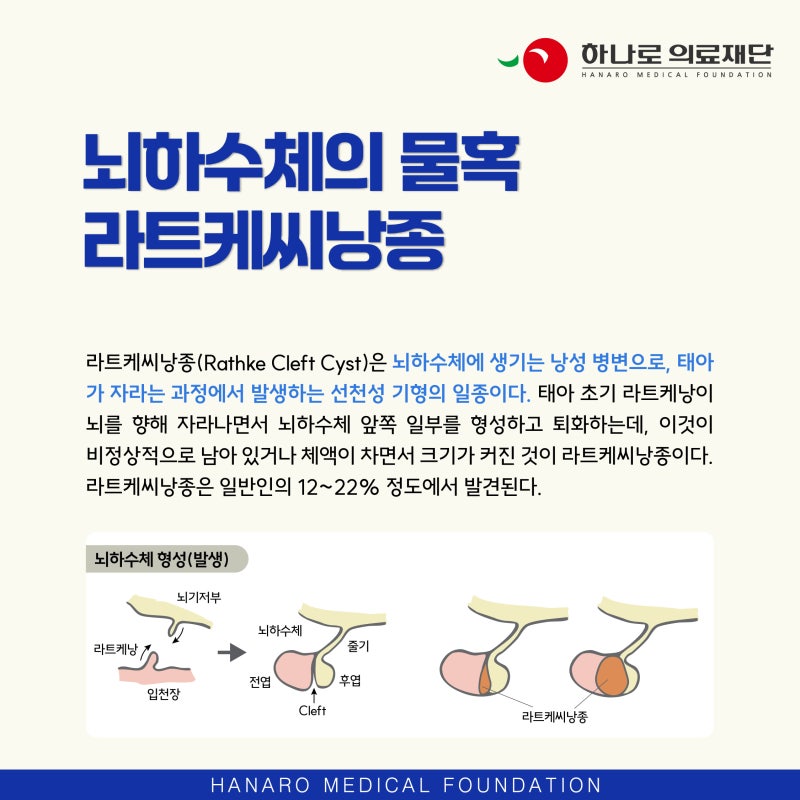
A Fluid-Filled Sac in the Pituitary: Rathke‘s Cleft Cyst
A Rathke‘s cleft cyst (RCC) is a cystic lesion that forms in the pituitary gland and is a type of congenital anomaly that occurs during fetal development. Early in fetal life, the Rathke‘s pouch grows toward the brain to form part of the anterior pituitary and then regresses. If it remains abnormally or fills with fluid and grows in size, it becomes a Rathke‘s cleft cyst. These cysts are found in approximately 12% to 22% of the general population.
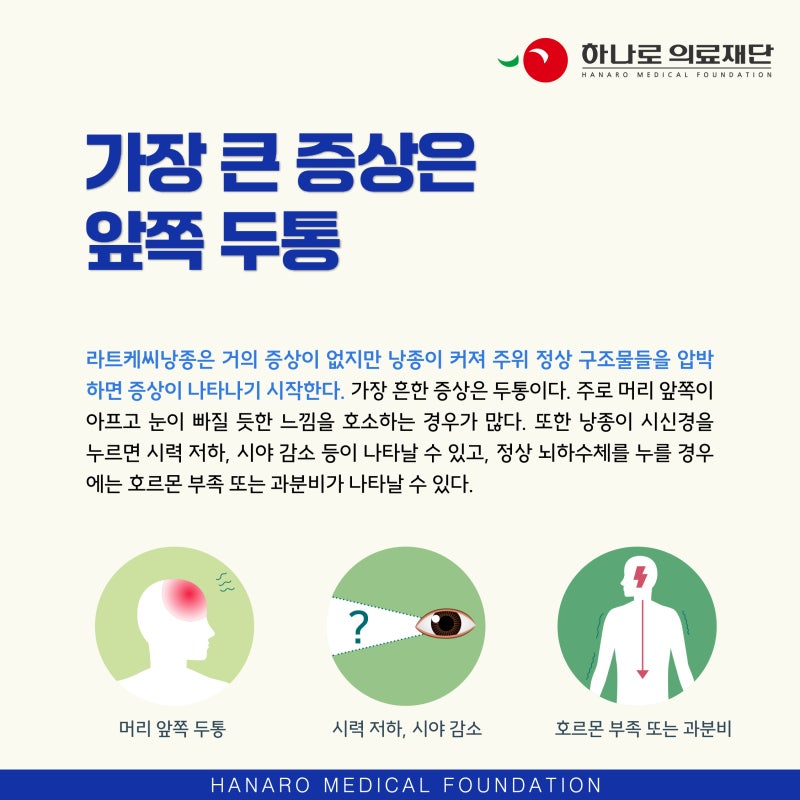
The Most Common Symptom: Frontal Headache
Rathke‘s cleft cysts are almost always asymptomatic, but symptoms begin to appear if the cyst grows large enough to compress surrounding normal structures. The most common symptom is a headache. Patients often complain of pain in the front of the head and a sensation as if their eyes are being pushed out. Additionally, if the cyst presses on the optic nerve, it can cause decreased vision or visual field loss. If it compresses the normal pituitary gland, it can lead to hormone deficiency or overproduction.
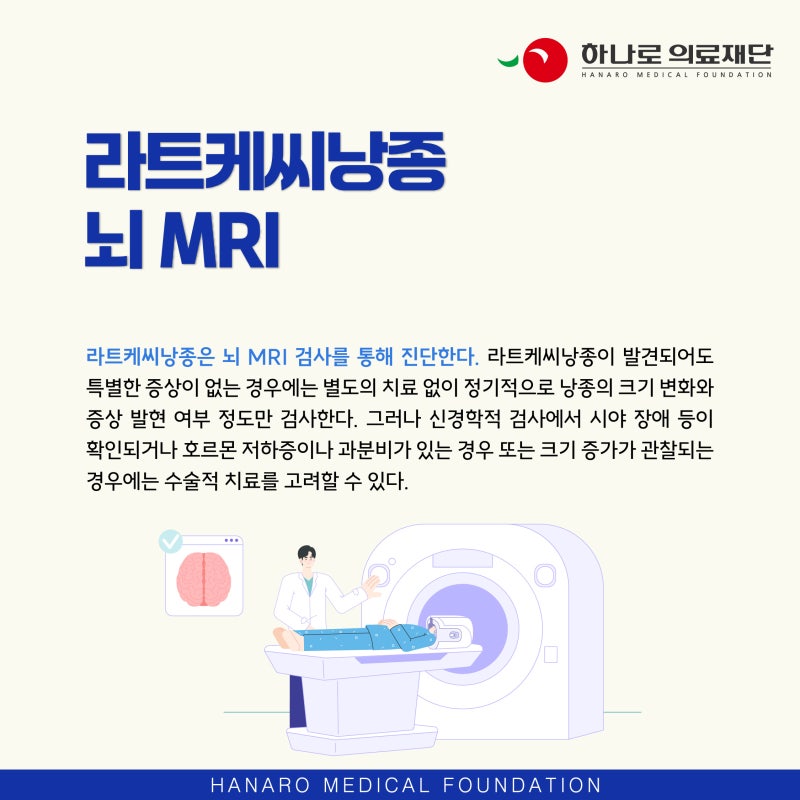
Brain MRI for Rathke‘s Cleft Cyst
Rathke‘s cleft cysts are diagnosed through a brain MRI scan. Even if a cyst is discovered, if there are no specific symptoms, no immediate treatment is required; instead, the cyst size and the emergence of symptoms are monitored through regular checkups. However, if visual field disturbances are confirmed in a neurological exam, if there is hormone deficiency or overproduction, or if an increase in size is observed, surgical treatment may be considered.
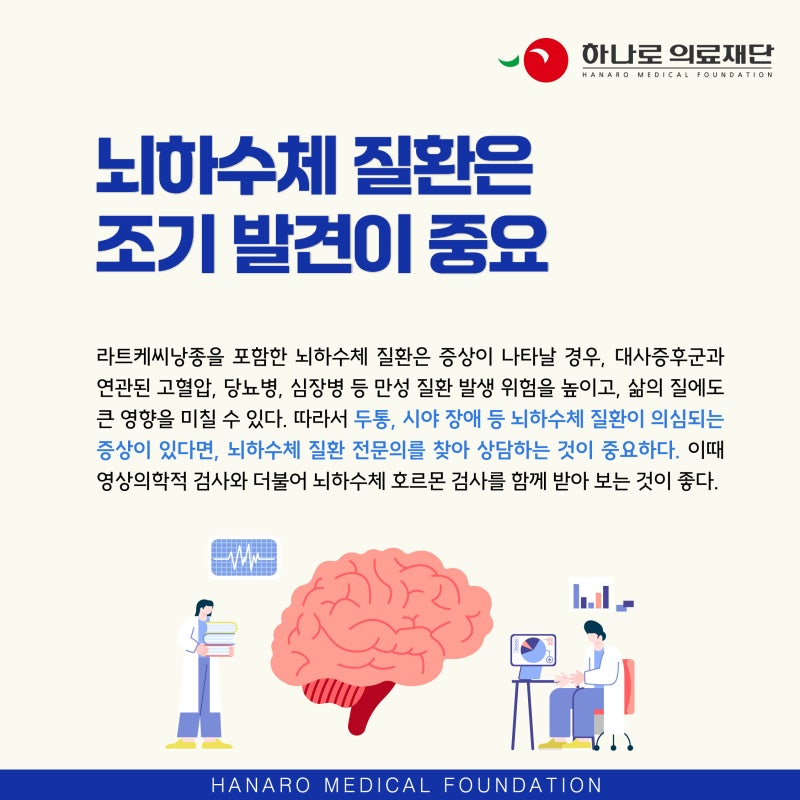
Early Detection is Crucial for Pituitary Diseases
When symptoms of pituitary diseases, including Rathke‘s cleft cysts, manifest, they can increase the risk of chronic conditions associated with metabolic syndrome, such as hypertension, diabetes, and heart disease, and significantly impact quality of life. Therefore, if you experience symptoms suspicious of a pituitary disorder, such as headaches or visual disturbances, it is important to consult a pituitary disease specialist. We recommend undergoing pituitary hormone tests along with diagnostic imaging.
This content is excerpted from a column by Dr. Eun-Jig Lee, an endocrinology specialist at Hanaro Medical Foundation, published in the February issue of the Korea Public Health Association‘s monthly magazine ‘Healthy Life’. Please refer to the column below for more details.
👇👇👇

To strengthen our expertise in endocrine disease treatment, Hanaro Medical Foundation Jongno Center has invited Professor Eun-Jig Lee, a leading authority on thyroid and pituitary diseases.
We provide specialized care for hypothyroidism/hyperthyroidism, thyroid tumors, pituitary and adrenal diseases, as well as anti-aging, childhood growth, and various hormone therapies including thyroid, adrenal cortex, and male hormones. We look forward to your interest and support.
You can book an appointment with Dr. Eun-Jig Lee in the Department of Endocrinology quickly and easily through Naver Reservation.
#RathkesCleftCyst #PituitaryGland #Headache #HanaroMedicalFoundationJongnoCenter
Frequently Asked Questions
What is Rathke's cleft cyst?
Rathke's cleft cyst is a congenital cystic lesion that occurs in the pituitary gland. It refers to a condition where tissue that should have formed part of the anterior pituitary and then degenerated during fetal development abnormally remains or grows into a cyst due to fluid accumulation. It is relatively common, found in about 12-22% of the general population.
What are the main symptoms of Rathke's cleft cyst?
The most common symptom is headache in the front of the head. Although there are usually almost no symptoms, if the cyst grows and compresses surrounding tissues, a headache that feels like the eyes are popping out can occur. Additionally, if it presses on the optic nerve, vision loss or reduced visual field may appear, and hormonal imbalances may also be accompanied.
How is Rathke's cleft cyst examined and diagnosed?
It is mainly diagnosed through brain MRI. In many cases, it is incidentally discovered during a brain MRI scan for a health check-up, as there are no specific symptoms. If a pituitary gland disorder is suspected, it is advisable to combine imaging tests with pituitary hormone tests.
If a Rathke's cleft cyst is found, does it always require surgery?
No, not necessarily. If there are no specific symptoms, only regular observation of changes in size and the appearance of symptoms is performed without surgery. However, surgical treatment should be considered if visual field disturbance is confirmed, if there is hypopituitarism or hypersecretion, or if an increase in the size of the cyst is observed.