2026-05-29
Pituitary Tumors: Common Yet Often Overlooked
Learn about pituitary tumors, which account for 10% of brain tumors. Discover the differences between functional and non-functional adenomas, symptoms, and treatment options.
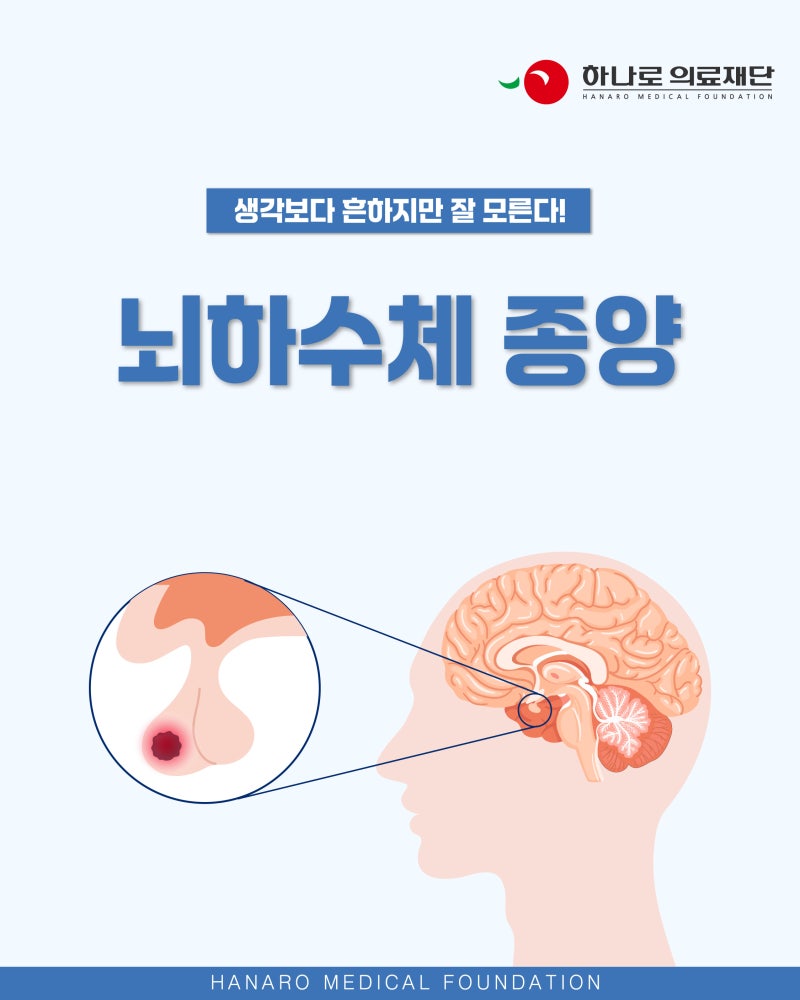
Pituitary Tumors: Common Yet Often Overlooked
Hello. This is Hanaro Medical Foundation, your health checkup center in Jongno and Gangnam.
Our bodies contain a very important organ called the ‘pituitary gland,’ which regulates hormonal balance.
Tumors developing in this pituitary gland are more common than you might think, accounting for approximately 10% of all brain tumors.
While most are benign, if they affect hormone secretion, they can cause various symptoms such as menstrual irregularities, infertility, and Cushing’s syndrome.
In particular, discoveries are increasing recently due to the widespread use of MR and CT scans during health checkups.
Today, Hanaro Medical Foundation will take a closer look at ‘pituitary tumors.’
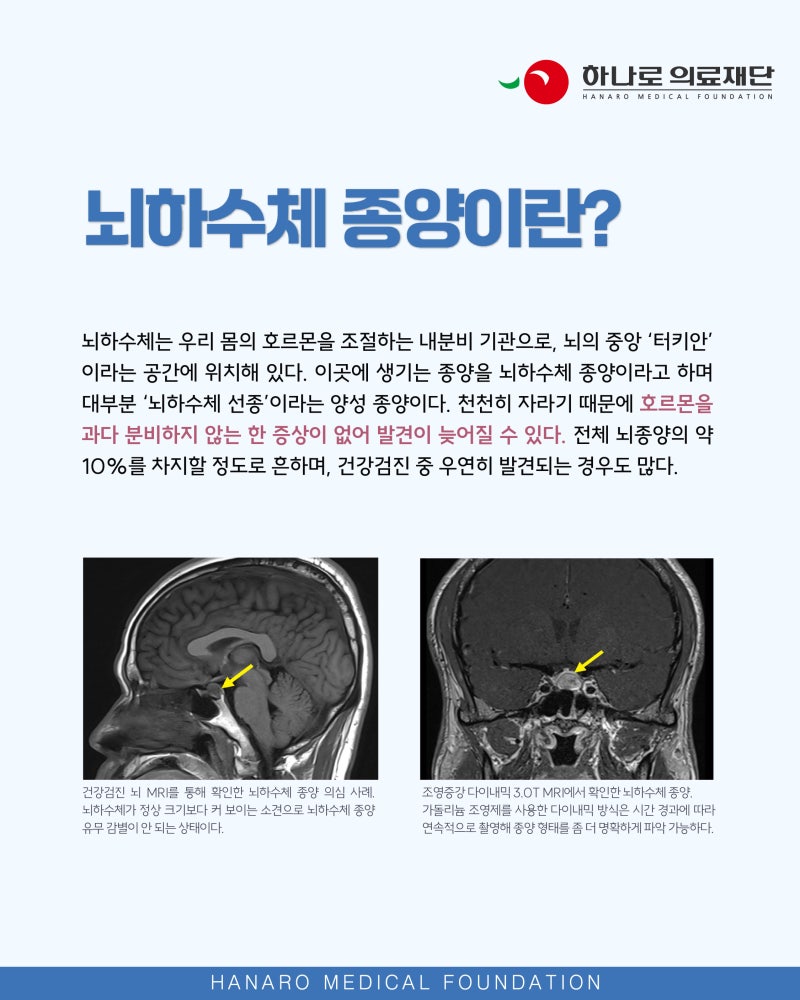
Pituitary Tumors: More Common Than Expected
The pituitary gland is an endocrine organ that regulates hormones in our body, located in a space called the ‘sella turcica’ at the center of the brain. Tumors that occur here are called pituitary tumors, and most are benign tumors known as ‘pituitary adenomas.’ Because they grow slowly, they may not cause symptoms unless they overproduce hormones, which can lead to late detection. They are common enough to account for about 10% of all brain tumors and are often discovered incidentally during health checkups.
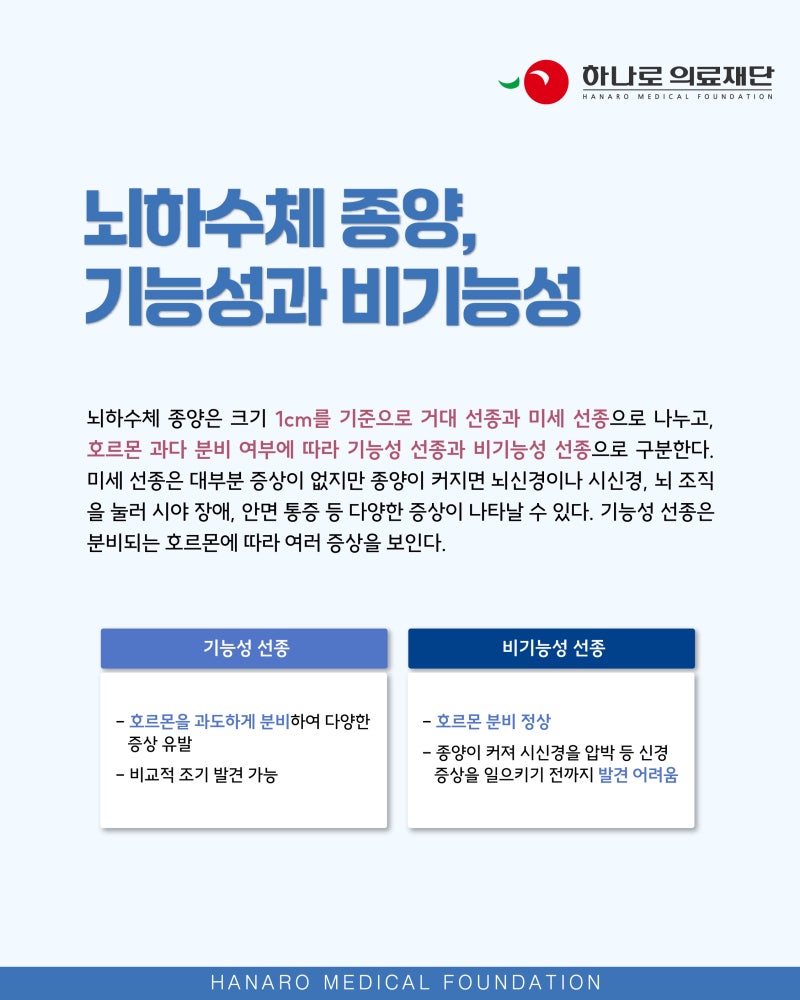
Pituitary Tumors: Functional vs. Non-functional
Pituitary tumors are classified as macroadenomas or microadenomas based on a 1cm size threshold, and as functional or non-functional adenomas based on whether they overproduce hormones. Microadenomas are mostly asymptomatic, but as a tumor grows, it can press on cranial nerves, the optic nerve, or brain tissue, causing symptoms like visual field defects and facial pain. Functional adenomas can present various symptoms depending on the hormone being secreted.
Functional Adenoma | Non-functional Adenoma |
- Overproduces hormones, causing various symptoms - Relatively early detection possible | - Normal hormone secretion - Difficult to detect until the tumor grows large enough to cause neurological symptoms like optic nerve compression |
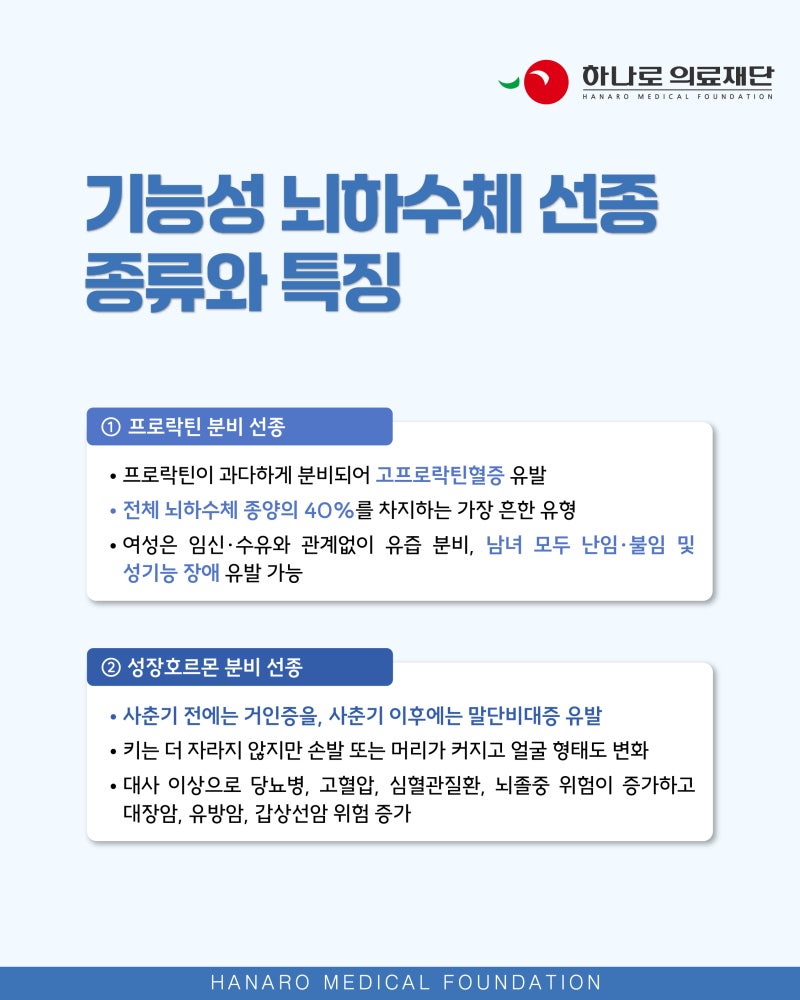
Types and Characteristics of Functional Pituitary Adenomas
✔️ Prolactin-secreting Adenoma
• Causes hyperprolactinemia due to excessive prolactin secretion
• The most common type, accounting for 40% of all pituitary tumors
• In women, milk discharge (galactorrhea) occurs regardless of pregnancy or breastfeeding
• Can cause infertility and sexual dysfunction in both men and women
✔️ Growth Hormone-secreting Adenoma
• Causes gigantism before puberty and acromegaly after puberty
• Height stops increasing, but hands, feet, or the head may grow larger, and facial features may change
• Increased risk of diabetes, hypertension, cardiovascular disease, and stroke due to metabolic abnormalities
• Increased risk of colon, breast, and thyroid cancers
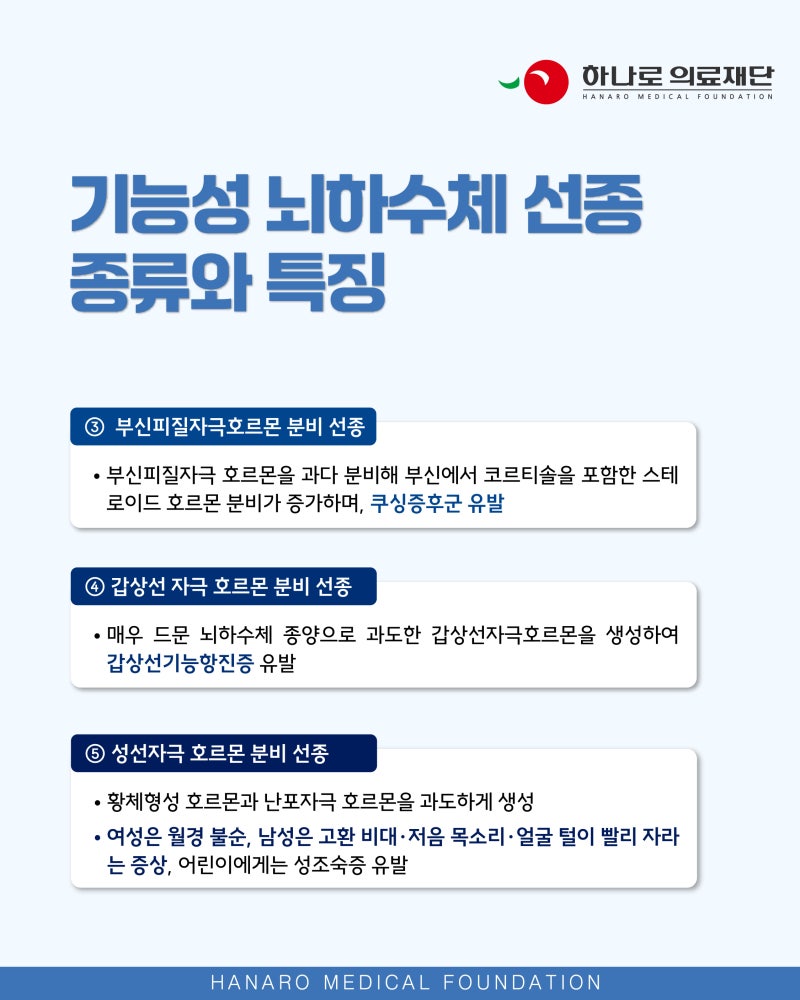
Types and Characteristics of Functional Pituitary Adenomas
✔️ ACTH-secreting Adenoma
• Overproduces adrenocorticotropic hormone, leading to increased secretion of steroid hormones including cortisol from the adrenal glands, causing Cushing’s syndrome
✔️ TSH-secreting Adenoma
• A very rare pituitary tumor that produces excessive thyroid-stimulating hormone, causing hyperthyroidism
• Symptoms include weight loss despite increased appetite, heat intolerance, and rapid pulse
✔️ Gonadotropin-secreting Adenoma
• Overproduces luteinizing hormone and follicle-stimulating hormone
• Causes menstrual irregularities in women; testicular enlargement, deep voice, and rapid facial hair growth in men
• Can cause precocious puberty in children
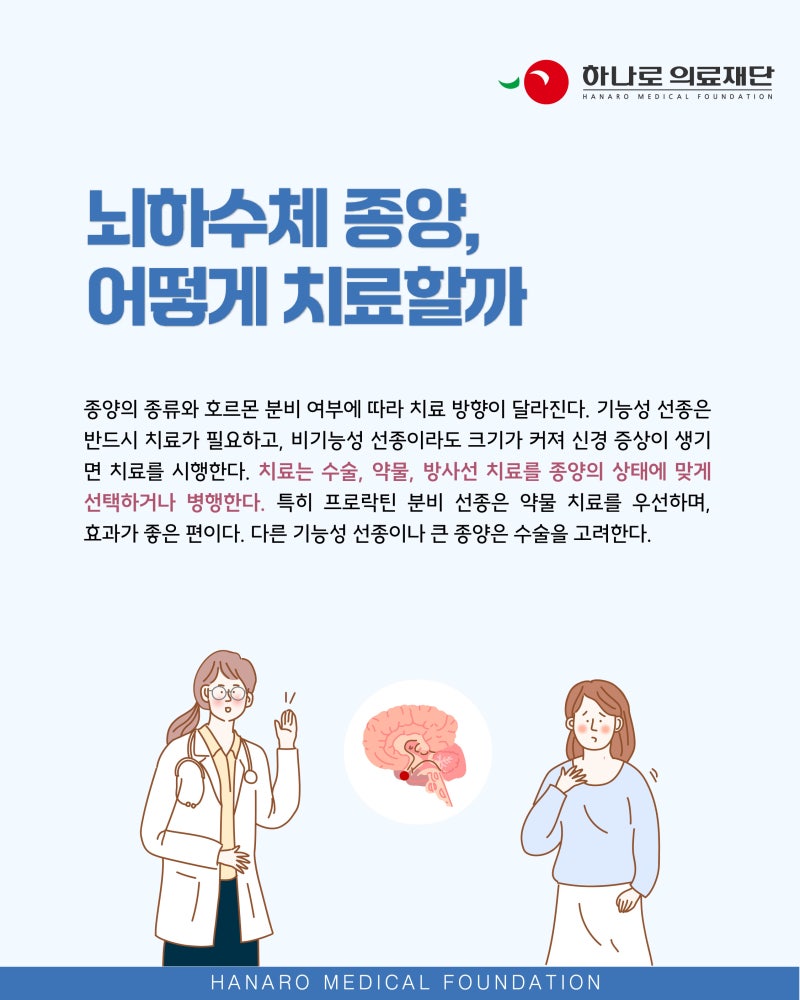
How are Pituitary Tumors Treated?
The direction of treatment varies depending on the type of tumor and hormone secretion. Functional adenomas always require treatment, and non-functional adenomas are treated if they grow large enough to cause neurological symptoms. Treatment options include surgery, medication, or radiation therapy, selected or combined based on the tumor’s condition. In particular, prolactin-secreting adenomas are primarily treated with medication, which tends to be highly effective. Surgery is considered for other functional adenomas or large tumors. With accurate diagnosis and meticulous care from specialized medical staff, symptoms of pituitary tumors can be significantly improved, enhancing the quality of life.
This content is excerpted from a column by Dr. Eun-Jig Lee, an endocrinology specialist at Hanaro Medical Foundation, published in the January issue of the Korea Public Health Association’s monthly magazine ‘Healthy Life.’ Please refer to the column below for more details. 👇👇👇
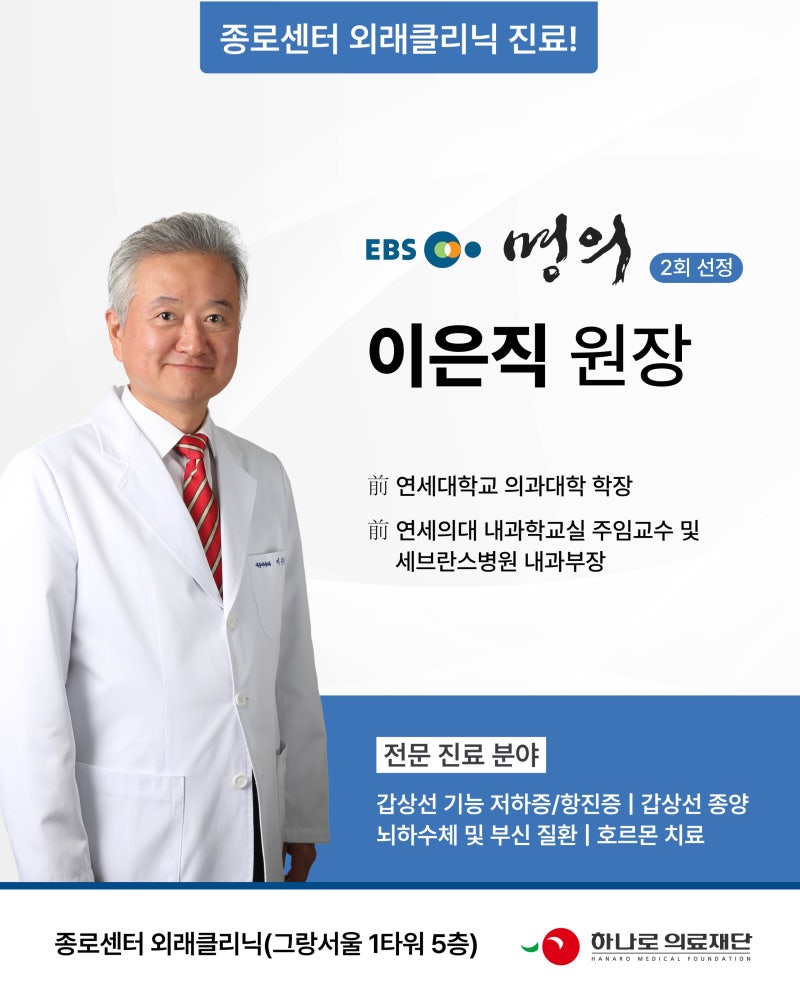
To strengthen our expertise in endocrine disease treatment, the Hanaro Medical Foundation Jongno Center has invited Professor Eun-Jig Lee, a leading authority on thyroid and pituitary diseases.
We provide specialized care for hypothyroidism/hyperthyroidism, thyroid tumors, pituitary and adrenal diseases, as well as anti-aging, childhood growth, and various hormone therapies including thyroid, adrenal cortical, and male hormones. We look forward to your interest and support.
You can book an appointment with Dr. Eun-Jig Lee in the Department of Endocrinology more quickly and easily through Naver Reservation.






#PituitaryTumor #PituitaryAdenoma #PituitaryGland #HanaroMedicalFoundation #HanaroMedicalFoundationJongnoCenter