2026-05-29
Prostate Cancer Prevention in Urology: PSA Screening Essential from Age 40
Prostate cancer is rising rapidly among Korean men. Early detection via PSA blood tests ensures a nearly 100% survival rate. Learn why screening is vital from age 40.
Prostate Cancer Prevention in Urology: PSA Screening Essential from Age 40

Hello. This is Hanaro Medical Foundation, your health checkup center in Jongno and Gangnam.
Recently, prostate cancer cases have been surging due to a rapidly aging population and Westernized eating habits.
Fortunately, if prostate cancer is detected in its early stages, the survival rate is close to 100%. Therefore, those in high-risk groups should actively undergo prostate screenings starting in their 40s! Today, we will explore ‘Prostate Cancer and PSA Screening’ with a renowned urology specialist from Hanaro Medical Foundation.
Prostate Cancer: The 2nd Most Common Cancer Among Korean Men
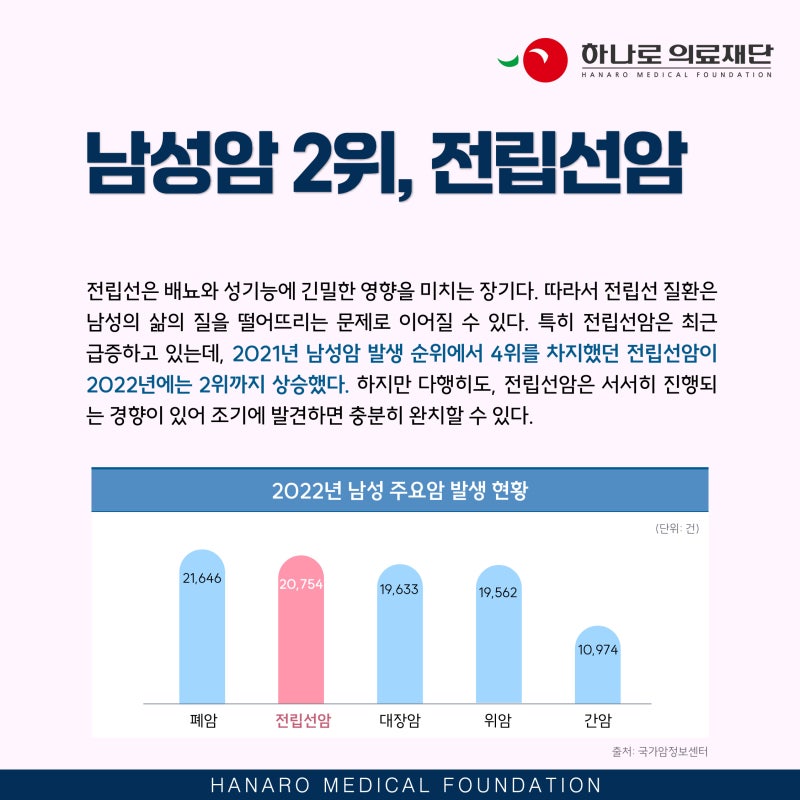
The prostate is an organ closely linked to urination and sexual function. Consequently, prostate diseases can lead to issues that significantly diminish a man’s quality of life. Prostate cancer, in particular, has shown a sharp upward trend recently; it ranked 4th in male cancer incidence in 2021 but rose to 2nd place in 2022. (Source: National Cancer Information Center) Luckily, prostate cancer tends to progress slowly, meaning it is highly curable if detected early.

What are the Symptoms of Prostate Cancer?
Prostate cancer often presents no subjective symptoms in its early stages. However, if the tumor grows large enough to obstruct the urethra, urinary symptoms such as frequent urination, a feeling of residual urine, or urinary urgency may occur. Furthermore, it can cause sexual dysfunction, which many men mistake for a natural sign of aging, leading them to miss the window for treatment. By the time pain is felt, the cancer has often progressed significantly, resulting in severe suffering and much lower treatment success rates. Therefore, regular screening is crucial even in the absence of symptoms.
Prostate-Specific Antigen (PSA) Blood Test
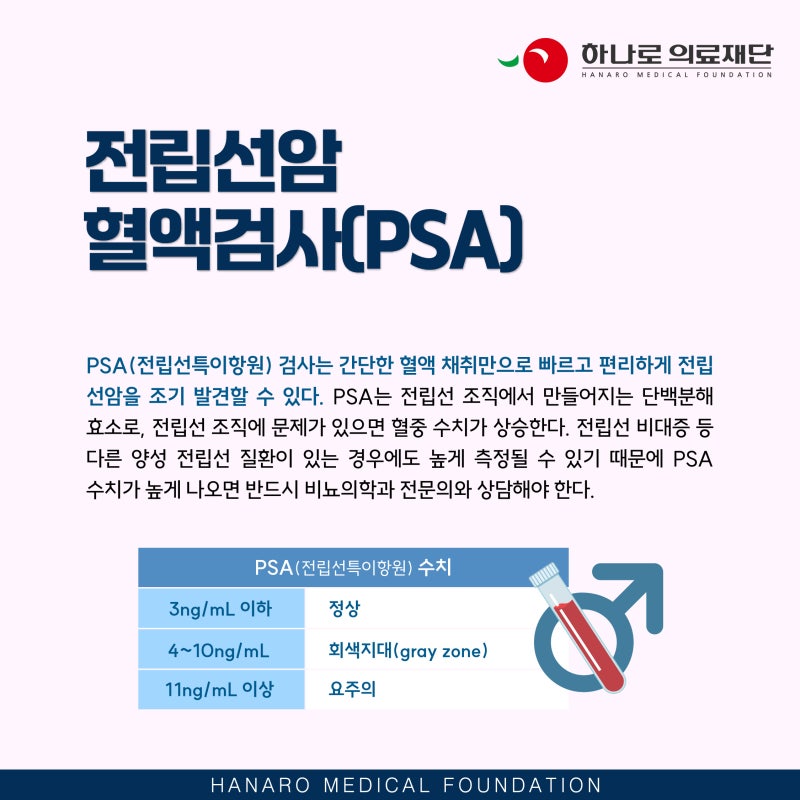
The PSA test in urology allows for the quick and convenient early detection of prostate cancer through a simple blood draw. PSA is a proteolytic enzyme produced by prostate tissue; if there is an issue with the tissue, levels in the blood rise. Since levels can also be elevated by other benign conditions like prostatic hyperplasia, it is essential to consult a urology specialist if your PSA levels are high.
PSA (Prostate-Specific Antigen) Levels | |
3 ng/mL or less | Normal |
4–10 ng/mL | Gray Zone |
11 ng/mL or more | High Alert |

Annual PSA Screening from Age 50
Early detection makes treatment easier and significantly increases its effectiveness. Therefore, an annual PSA test is recommended for those aged 50 and over, even without symptoms. Those with a family history should start paying attention and get screened from age 40. It is also vital not to overlook changes in PSA levels over time. If any abnormalities are found during early screening, you must receive a consultation and treatment from a urology expert.

At Hanaro Medical Foundation (Gangnam),
we have invited Professor Byung Ha Chung, who previously served as the Head of Urology and Team Leader of the Prostate Cancer Clinic at Gangnam Severance Hospital.
He focuses on treating urological conditions such as prostate cancer, prostatic hyperplasia, bladder cancer, and kidney cancer. We encourage patients concerned about these conditions to seek his expertise.
You can book an appointment with Director Byung Ha Chung of the Urology Department more quickly and easily through Naver Reservation.







#ProstateCancer #PSATest #ProstateSpecificAntigen #HanaroMedicalFoundation
Frequently Asked Questions
What are the early symptoms of prostate cancer?
Early prostate cancer usually has almost no noticeable symptoms. Urinary problems such as frequent urination, a feeling of incomplete emptying, or urgent urination, as well as sexual dysfunction, only appear after the cancer has grown large enough to obstruct the urethra. When pain is felt, the cancer may already be quite advanced, so regular check-ups are important even without symptoms.
What is a PSA test?
A PSA (Prostate-Specific Antigen) test is a blood test that can detect prostate cancer early with a simple blood draw. PSA is a proteolytic enzyme produced by prostate tissue, and its blood levels rise when there is a problem with the prostate.
Does a high PSA level always mean prostate cancer?
No, not necessarily. High PSA levels can also be measured in cases of other benign prostate conditions, such as benign prostatic hyperplasia. Generally, a level below 3 ng/mL is considered normal, and if your levels are high, you should definitely consult a urologist to determine the exact cause.
When should I start getting prostate cancer screenings?
Men aged 50 and older should get a regular annual PSA test, even if they have no symptoms. If you are in a high-risk group with a family history of prostate cancer, it is strongly recommended to start screening proactively from your 40s.