2026-05-29
Gangnam Urology: 4 Major Causes of Male Urinary Disorders
Learn about the 4 main causes of male urinary disorders, including BPH and prostatitis, and find expert care at Hanaro Medical Foundation in Gangnam.
Gangnam Urology: 4 Major Causes of Male Urinary Disorders
Hello. This is Hanaro Medical Foundation, your Gangnam urology checkup center.
Symptoms such as incomplete emptying of the bladder, frequent urination, or an uncontrollable urge to urinate are common urinary disorders among men after middle age. While these issues can be difficult to talk about, leaving them untreated can cause significant discomfort in daily life, making accurate diagnosis and treatment essential.
Representative causes include Benign Prostatic Hyperplasia (BPH), overactive bladder, prostatitis, and urinary stones.
Today, Hanaro Medical Foundation will explore the ‘Causes of Male Urinary Disorders’.
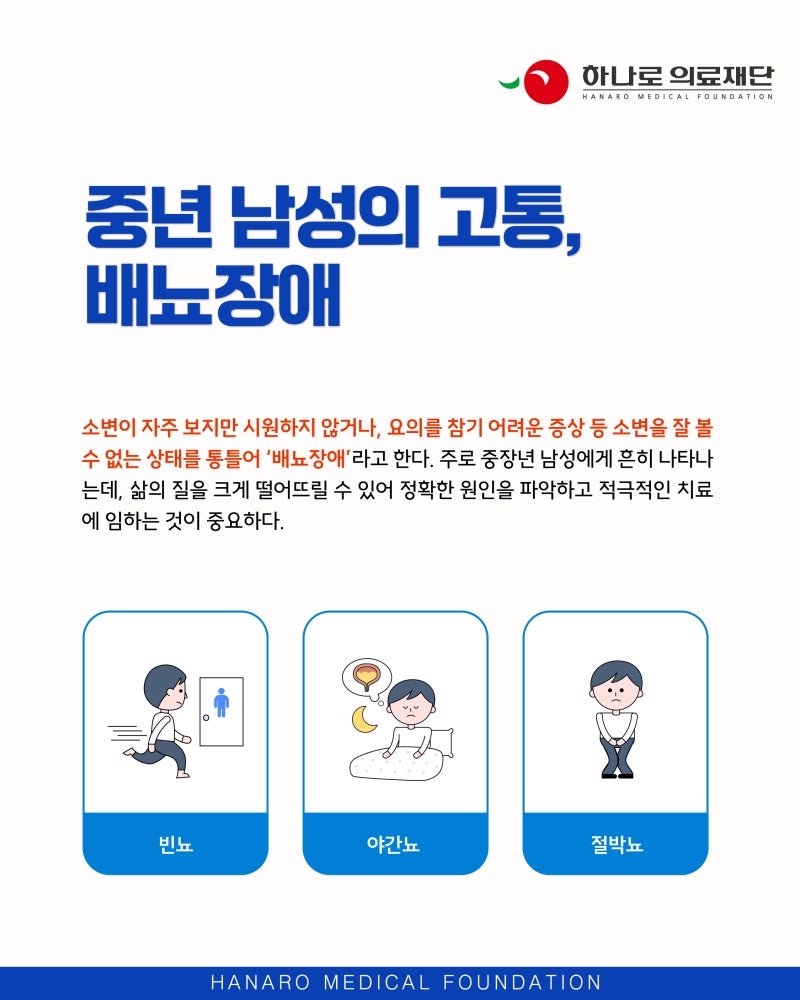
The Suffering of Middle-Aged Men: Urinary Disorders
‘Urinary disorder’ is a collective term for conditions where one cannot urinate properly, such as frequent but unsatisfying urination or difficulty holding back the urge. It is particularly common in middle-aged and older men and can significantly reduce quality of life. Therefore, it is important to identify the exact cause through a renowned urologist and engage in active treatment.
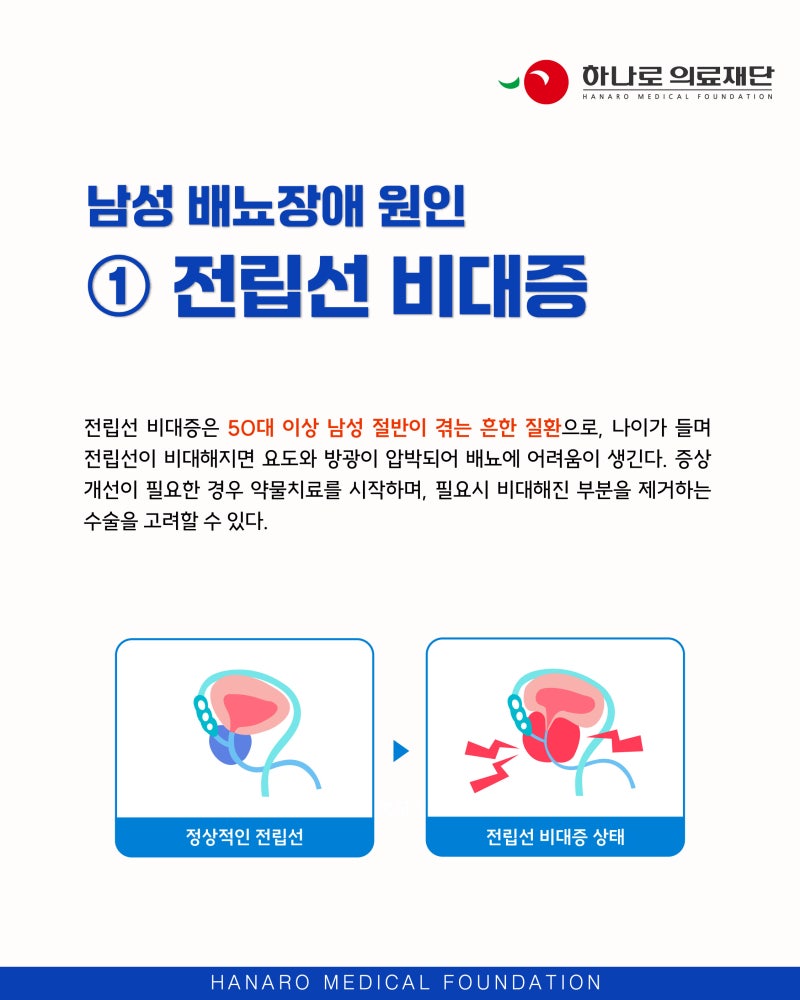
Cause of Male Urinary Disorder ① Benign Prostatic Hyperplasia (BPH)
BPH is a common condition affecting half of men in their 50s or older. As the prostate enlarges with age, it compresses the urethra and bladder, causing difficulty in urination. If symptom improvement is needed, medication is started at a Gangnam urology clinic, and surgery to remove the enlarged portion may be considered if necessary.
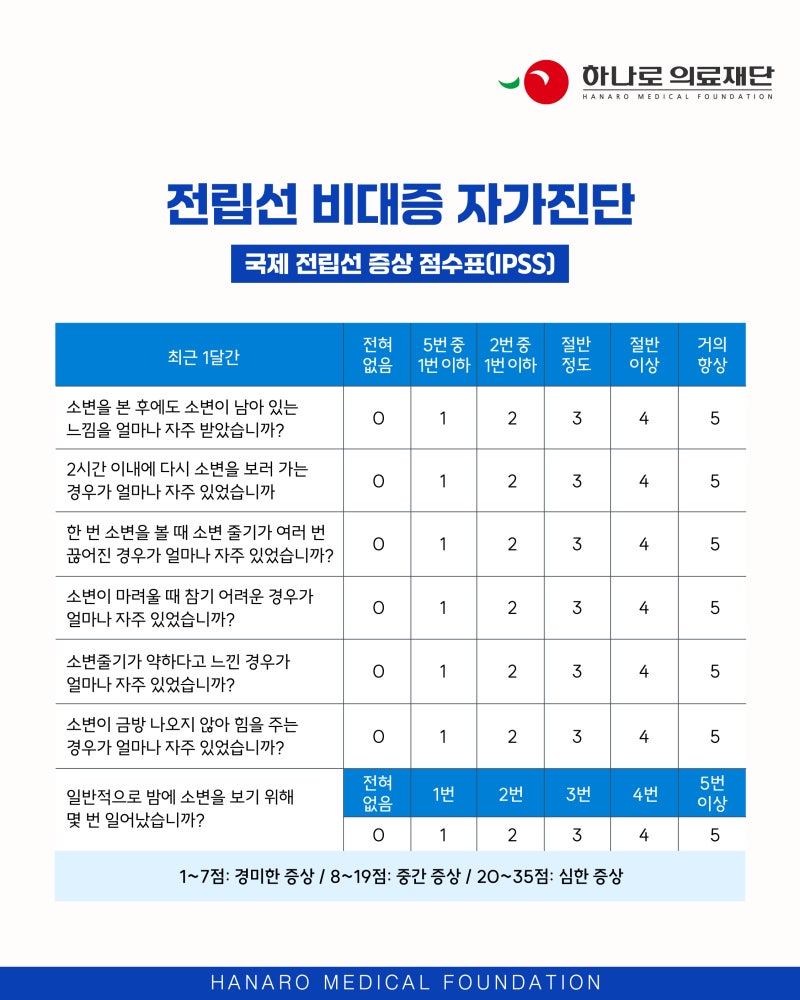
[BPH Self-Diagnosis - International Prostate Symptom Score (IPSS)]
Over the past month | Not at all | Less than 1 in 5 times | Less than half the time | About half the time | More than half the time | Almost always | |
1 | How often have you had the sensation of not emptying your bladder completely after you finished urinating? | 0 | 1 | 2 | 3 | 4 | 5 |
2 | How often have you had to urinate again less than two hours after you finished urinating? | 0 | 1 | 2 | 3 | 4 | 5 |
3 | How often have you found you stopped and started again several times when you urinated? | 0 | 1 | 2 | 3 | 4 | 5 |
4 | How often have you found it difficult to postpone urination? | 0 | 1 | 2 | 3 | 4 | 5 |
5 | How often have you had a weak urinary stream? | 0 | 1 | 2 | 3 | 4 | 5 |
6 | How often have you had to push or strain to begin urination? | 0 | 1 | 2 | 3 | 4 | 5 |
7 | How many times did you typically get up to urinate from the time you went to bed at night until the time you got up in the morning? | None | 1 time | 2 times | 3 times | 4 times | 5 or more times |
0 | 1 | 2 | 3 | 4 | 5 | ||
1-7 points: Mild symptoms / 8-19 points: Moderate symptoms / 20-35 points: Severe symptoms | |||||||
Cause of Male Urinary Disorder ② Overactive Bladder
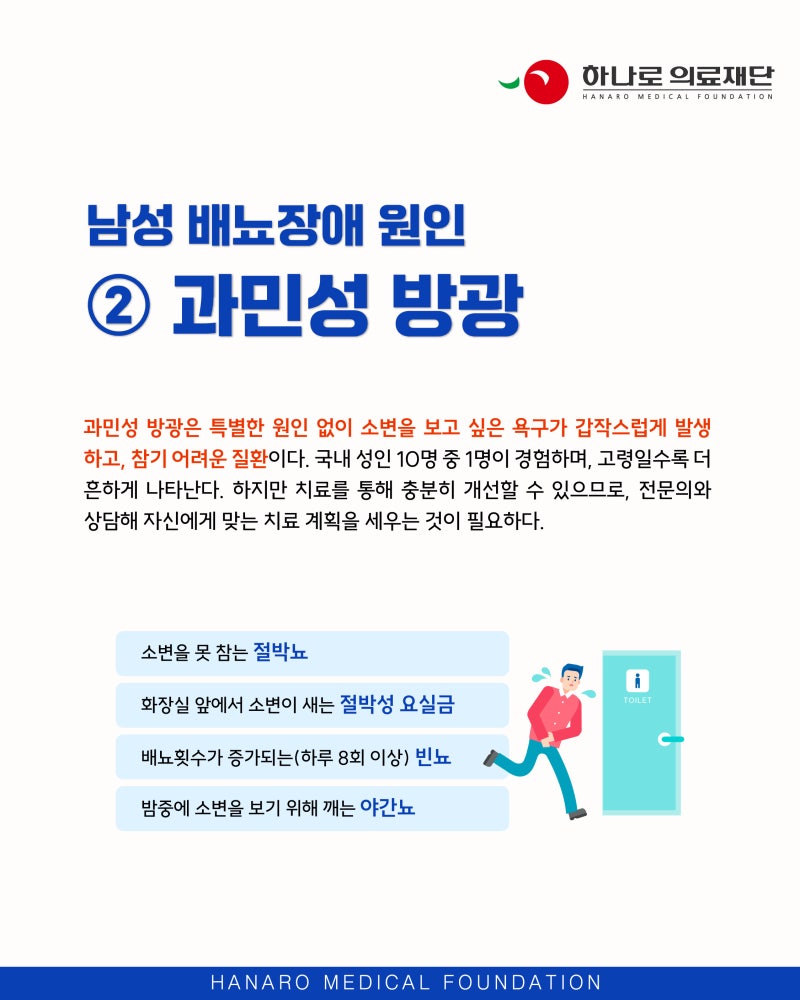
Overactive bladder is a condition where a sudden, uncontrollable urge to urinate occurs without a specific cause. It is experienced by 1 in 10 adults in Korea and becomes more common with age. However, it can be significantly improved through treatment at a Gangnam urology clinic, so it is necessary to consult with a renowned urologist to establish a personalized treatment plan.
Urgency: Inability to hold urine
Urge Incontinence: Leaking urine before reaching the bathroom
Frequency: Increased number of urinations (8 or more times a day)
Nocturia: Waking up at night to urinate
Cause of Male Urinary Disorder ③ Prostatitis
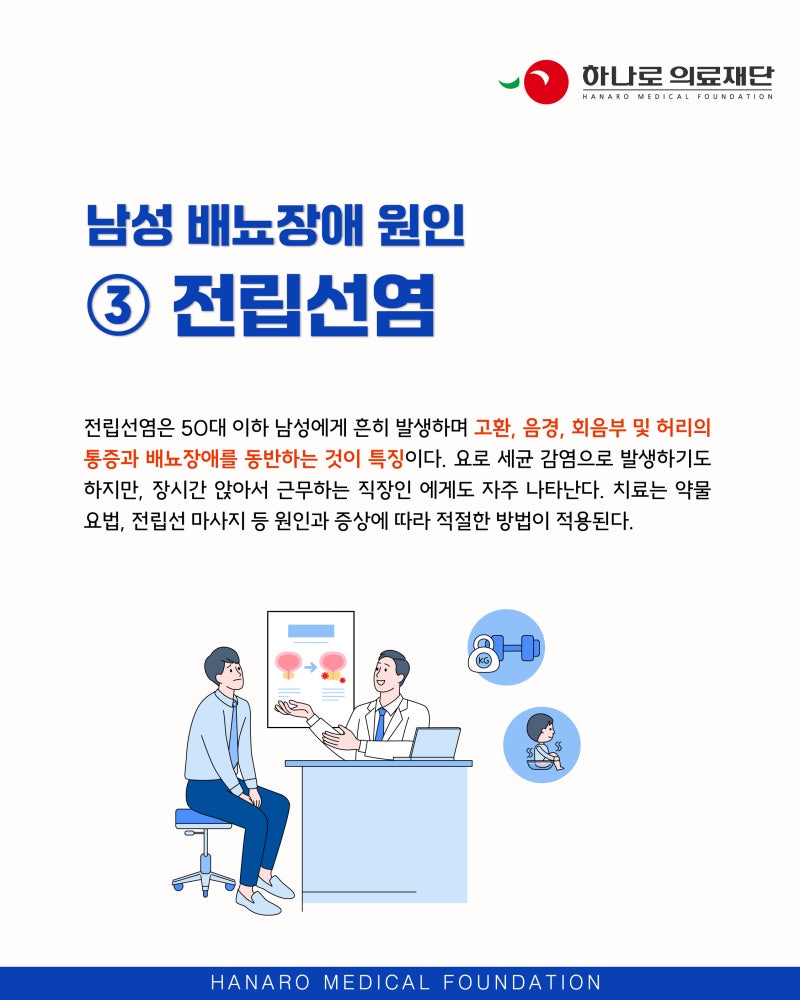
Prostatitis commonly occurs in men under 50 and is characterized by pain in the testicles, penis, perineum, and lower back, accompanied by urinary disorders. While it can be caused by bacterial infections in the urinary tract, it also frequently appears in office workers who sit for long periods. Treatment involves appropriate methods such as drug therapy or prostate massage, depending on the cause and symptoms.
Cause of Male Urinary Disorder ④ Urinary Stones
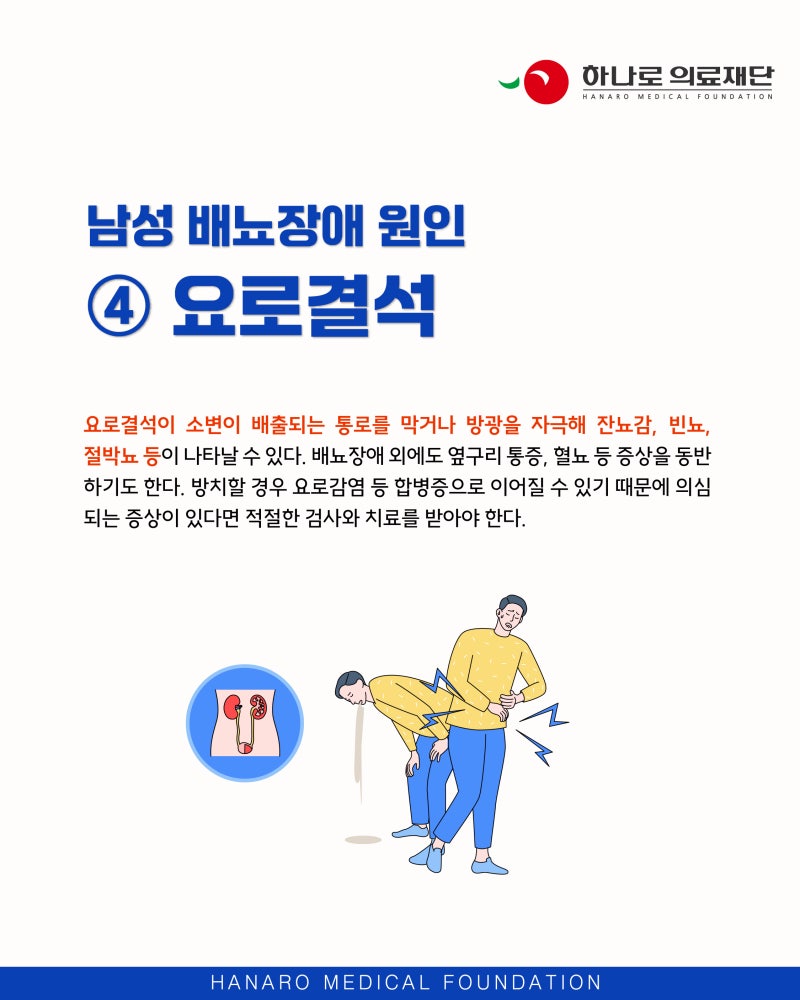
Urinary stones can block the passage of urine or irritate the bladder, leading to a sense of residual urine, frequency, and urgency. In addition to urinary disorders, symptoms like flank pain and hematuria (blood in urine) may occur. If left untreated, it can lead to complications such as urinary tract infections. Therefore, if you suspect any symptoms, you should receive proper examination and treatment from a renowned urologist.

At Hanaro Medical Foundation (Gangnam),
We have invited Professor Chung Byung-ha, who previously served as the Head of Urology and Team Leader of the Prostate Cancer Clinic at Gangnam Severance Hospital.
He focuses on treating urological diseases such as prostate cancer, BPH, bladder cancer, and kidney cancer. We look forward to the interest of patients concerned about these conditions.
You can make a medical appointment with Director Chung Byung-ha of the Department of Urology more quickly and easily through Naver Reservation.






#HanaroMedicalFoundation #HanaroLeadersClinic #HanaroMedicalFoundationGangnamCenter #BPH #OveractiveBladder #Prostatitis #UrinaryStones
Frequently Asked Questions
What are the main causes of male voiding dysfunction?
There are four main causes: benign prostatic hyperplasia, overactive bladder, prostatitis, and urinary stones. It can occur for various reasons, such as an enlarged prostate with age or an oversensitive bladder without a specific cause, so an accurate diagnosis is necessary.
How is benign prostatic hyperplasia treated?
Yes, medication is usually the first line of treatment, and surgery may be considered if necessary. A urologist will assess the patient's condition and prescribe medication to improve symptoms, and surgical treatment will be performed if the enlarged prostate needs to be removed.
Can young men under 50 also experience voiding dysfunction?
Yes, prostatitis can commonly occur in men under 50. It often appears not only due to urinary bacterial infections but also in office workers who sit for long periods, and it is characterized by voiding dysfunction accompanied by testicular or perineal pain.
What are the typical symptoms of overactive bladder?
Urgency, which is difficulty holding urine, and frequent urination, which is urinating 8 or more times a day, are typical. Additionally, symptoms such as urge incontinence, where urine leaks before reaching the toilet, or nocturia, waking up at night to urinate, can accompany it, causing significant inconvenience in daily life.
What happens if urinary stones are left untreated?
It can lead to serious complications such as urinary tract infections. Stones can block the urine outflow tract or irritate the bladder, causing a feeling of incomplete emptying and frequent urination, and flank pain or hematuria may appear, so if you suspect symptoms, you should seek immediate examination and treatment.