2026-05-29
Pulmonary Function Test: Early Detection of Chronic Obstructive Pulmonary Disease (COPD)
Learn about the importance of pulmonary function tests for early COPD detection and the new 2026 National Health Screening updates.
Pulmonary Function Test: Early Detection of Chronic Obstructive Pulmonary Disease (COPD)
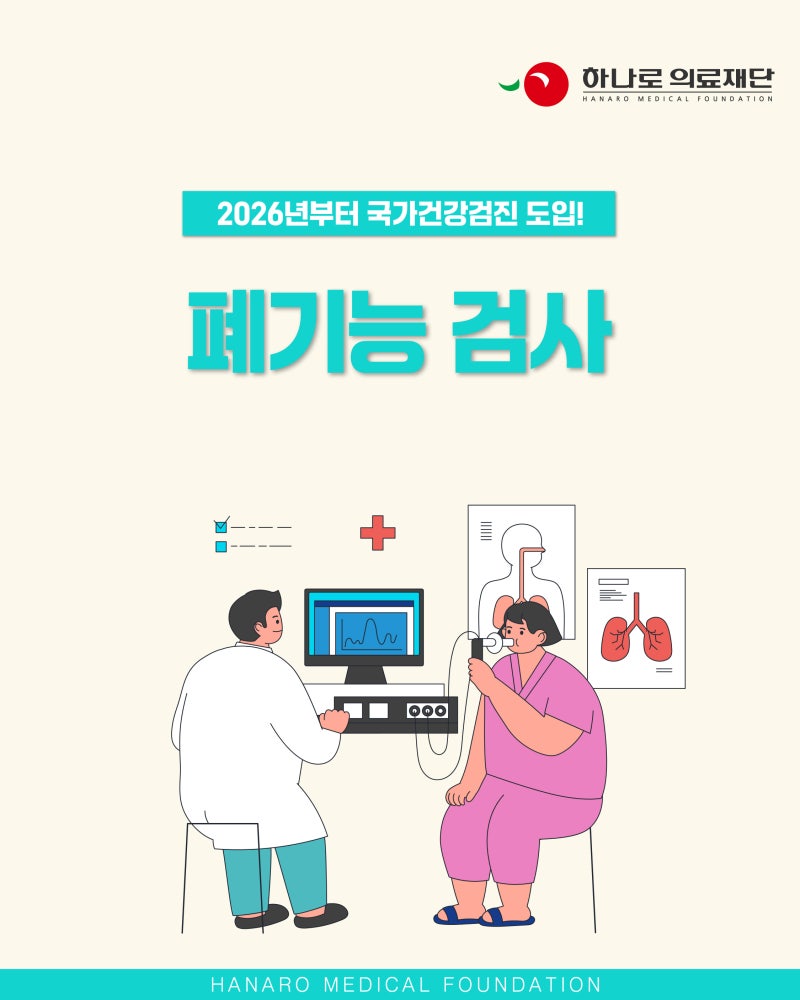
Hello. This is Hanaro Medical Foundation, your health screening center in Jongno and Gangnam. Many of you are likely planning your health checkups for the beginning of the year. Starting in 2026, pulmonary function tests will be newly added to the general items of the National Health Screening. Today, Hanaro Medical Foundation will guide you through the ‘pulmonary function test’ used to detect lung diseases such as Chronic Obstructive Pulmonary Disease (COPD).
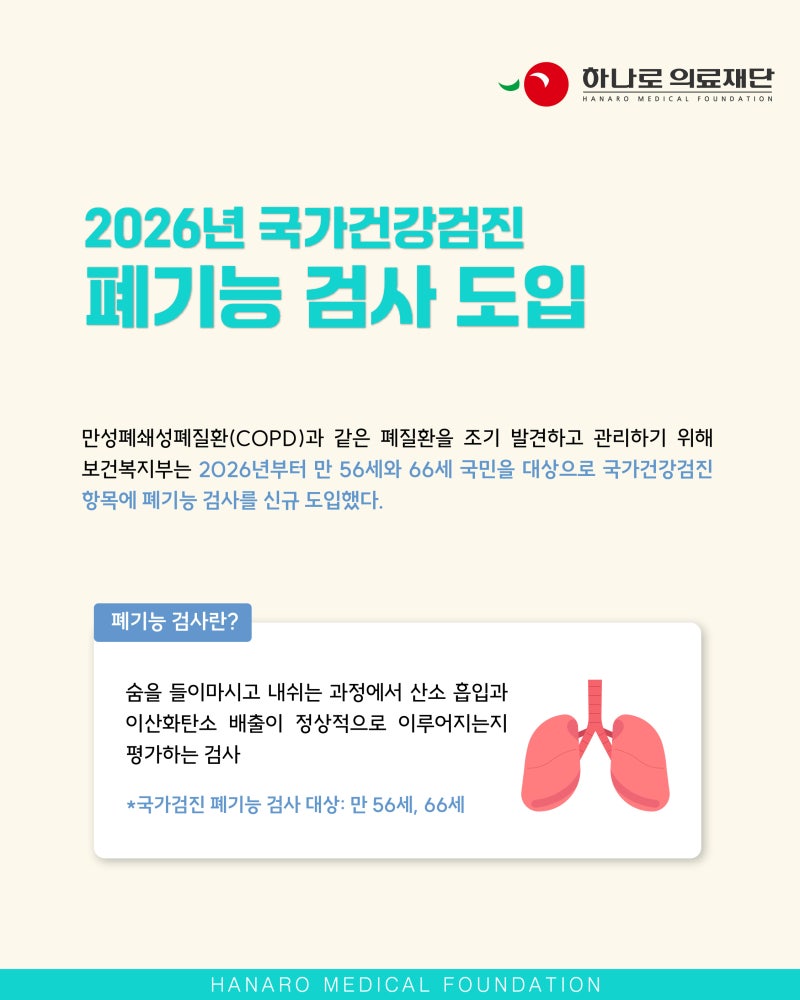
Introduction of Pulmonary Function Tests to National Health Screening in 2026
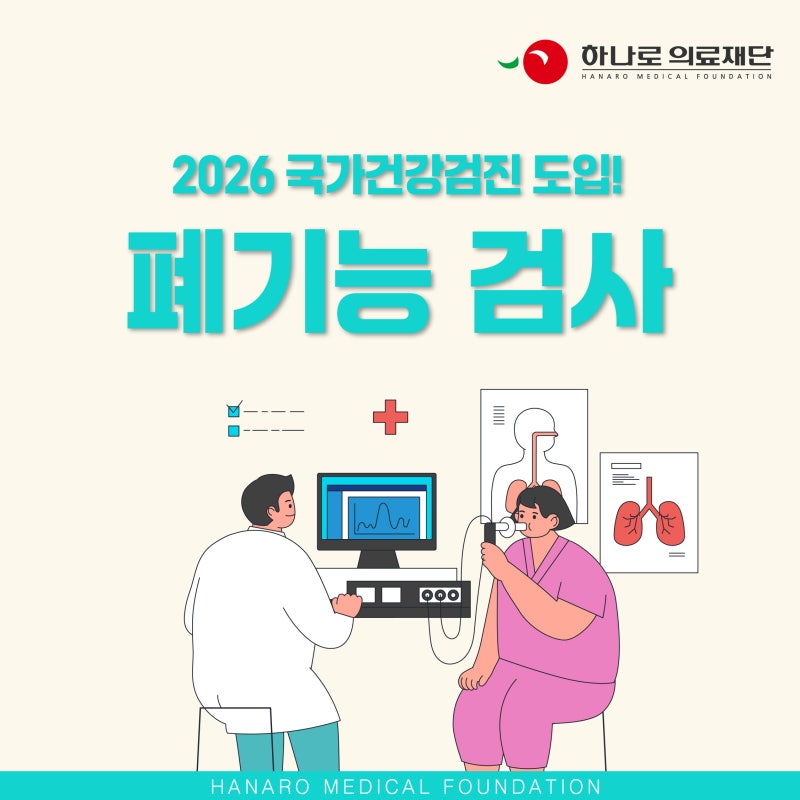
To ensure early detection and management of lung diseases like Chronic Obstructive Pulmonary Disease (COPD), the Ministry of Health and Welfare has introduced pulmonary function tests as a new item in the National Health Screening for citizens aged 56 and 66, starting in 2026.
What is a Pulmonary Function Test?
It is an evaluation that measures how well oxygen is inhaled and carbon dioxide is exhaled during the breathing process.
*Target groups for the 2026 National Health Screening pulmonary function test: Ages 56 and 66
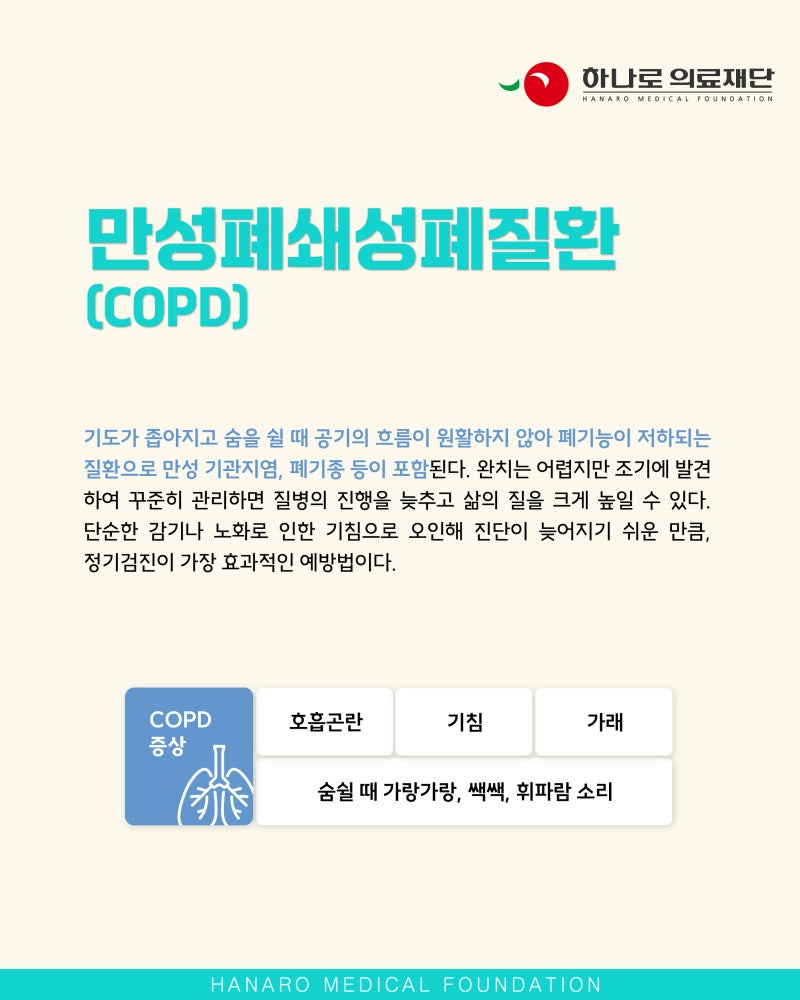
Chronic Obstructive Pulmonary Disease (COPD)
This is a condition where lung function declines because the airways narrow and air cannot flow smoothly when breathing; it includes chronic bronchitis and emphysema. While a complete cure is difficult, early detection and consistent management can slow the progression of the disease and significantly improve quality of life. Regular checkups are the most effective prevention method, as the diagnosis is often delayed when symptoms are mistaken for a simple cold or a cough due to aging.
COPD Symptoms ✔ Shortness of breath ✔ Cough ✔ Phlegm ✔ Wheezing, rattling, or whistling sounds when breathing
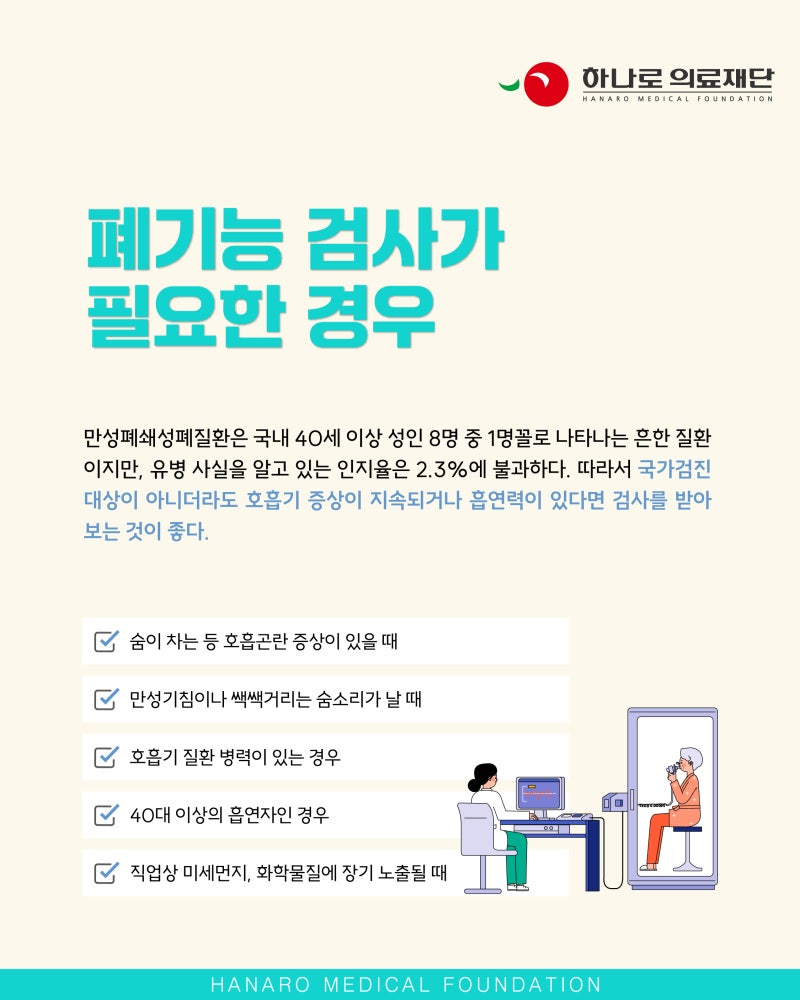
When a Pulmonary Function Test is Necessary
Chronic Obstructive Pulmonary Disease is a common condition affecting about 1 in 8 adults over the age of 40 in Korea, yet the awareness rate—those who actually know they have the disease—is only 2.3%. Therefore, even if you are not in the target age group for the national screening, it is recommended to get tested if you have persistent respiratory symptoms or a history of smoking.
✔ When experiencing shortness of breath or difficulty breathing
✔ When suffering from a chronic cough or wheezing
✔ If you have a history of respiratory disease
✔ If you are a smoker in your 40s or older
✔ If you are long-term exposed to fine dust or chemicals due to your occupation
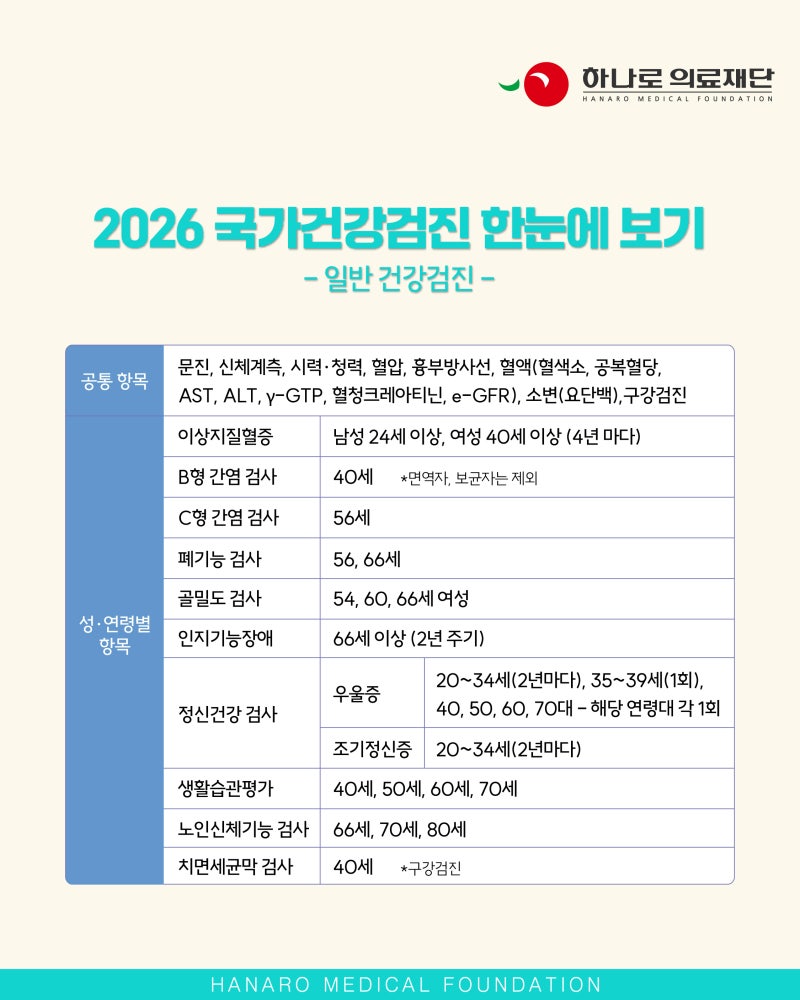
2026 National Health Screening Items at a Glance - General Health Screening
Category | Items and Targets | ||
Common Items | Questionnaire, physical measurements, vision/hearing tests, blood pressure, chest X-ray, blood tests (hemoglobin, fasting blood sugar, AST, ALT, γ-GTP, serum creatinine, e-GFR), urinalysis (proteinuria), dental checkup | ||
By Sex/Age | Dyslipidemia | Males 24+, Females 40+ (Every 4 years) | |
Hepatitis B Test | Age 40 *Excluding those with immunity or carriers | ||
Hepatitis C Test | Age 56 | ||
Pulmonary Function Test | Ages 56, 66 | ||
Bone Density Test | Females aged 54, 60, 66 | ||
Cognitive Dysfunction | Age 66+ (Every 2 years) | ||
Mental Health | Depression | 20–34 (Every 2 years), 35–39 (Once), 40s, 50s, 60s, 70s - Once per decade | |
Early Psychosis | Ages 20–34 (Every 2 years) | ||
Lifestyle Assessment | Ages 40, 50, 60, 70 | ||
Geriatric Function Test | Ages 66, 70, 80 | ||
Dental Plaque Test | Age 40 *Dental checkup | ||
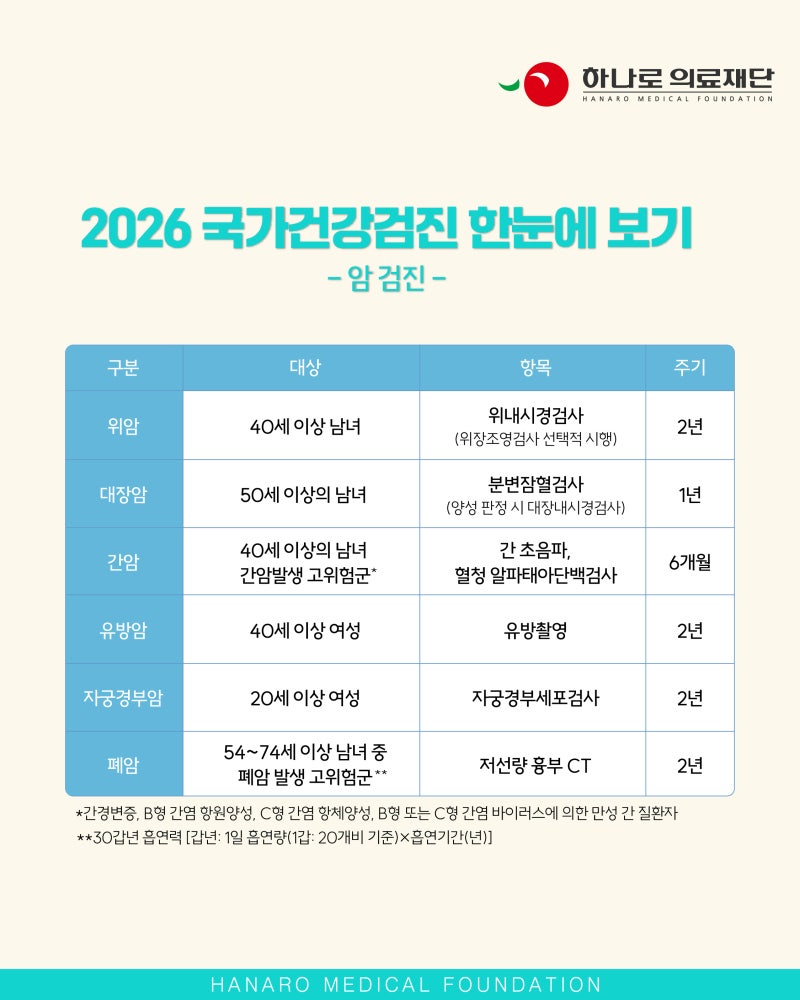
2026 National Health Screening Items at a Glance - Cancer Screening
Type | Target | Item | Cycle |
Stomach Cancer | Men and women 40+ | Gastroscopy (Upper GI series optional) | 2 years |
Colon Cancer | Men and women 50+ | Fecal Occult Blood Test (Colonoscopy if positive) | 1 year |
Liver Cancer | High-risk group* aged 40+ *Liver cirrhosis, HBsAg positive, HCV Ab positive, chronic liver disease due to HBV or HCV | Liver Ultrasound, Serum AFP test | 6 months |
Breast Cancer | Women 40+ | Mammography | 2 years |
Cervical Cancer | Women 20+ | Pap Smear | 2 years |
Lung Cancer | High-risk group* aged 54–74 *30 pack-year smoking history ※Pack-year: Daily packs × years smoked | Low-dose Chest CT | 2 years |






#PulmonaryFunctionTest #COPD #ChronicObstructivePulmonaryDisease #NationalHealthScreening #HanaroMedicalFoundation #HanaroMedicalFoundationJongno #HanaroMedicalFoundationGangnam
Frequently Asked Questions
Who is eligible for the lung function test added to the National Health Screening from 2026?
Citizens aged 56 and 66 are eligible. The Ministry of Health and Welfare newly introduced lung function tests as a national health screening item for these age groups from 2026 to facilitate early detection and management of lung diseases such as Chronic Obstructive Pulmonary Disease (COPD).
Can Chronic Obstructive Pulmonary Disease (COPD) be completely cured?
No, a complete cure is difficult. However, early detection and consistent management can slow the progression of the disease and significantly improve the quality of life. Since it is easily mistaken for a common cold or aging, prevention through regular lung function tests is most important.
How is a lung function test performed?
It is evaluated by the process of inhaling and exhaling. During this process, it is checked whether oxygen intake and carbon dioxide exhalation are normally and smoothly performed to diagnose whether lung function has deteriorated.
Should I get a lung function test even if I am not eligible for the national screening?
Yes, it is recommended if you have respiratory symptoms or a history of smoking. Especially if you experience shortness of breath, chronic cough, wheezing, or if you are a smoker over 40, or work in an occupation with long-term exposure to fine dust and chemicals, the test is recommended.
What are the main symptoms of Chronic Obstructive Pulmonary Disease (COPD)?
Shortness of breath, cough, phlegm, and abnormal breathing sounds are the main symptoms. If you experience rattling, wheezing, or whistling sounds when breathing, you should suspect COPD and require an accurate examination.